GD 16.1 - April 2026
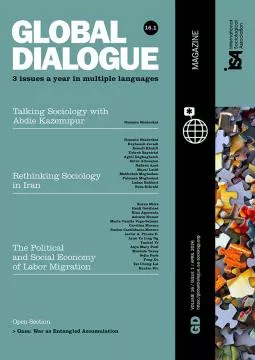
Global Dialogue is available in multiple languages!
Select the language to download the issue.
Editors:
Breno Bringel.
Assistant Editors:
Marcia Rangel Candido.
Associate Editor:
Christopher Evans.
Managing Editors:
Lola Busuttil, August Bagà.
Consultants:
Brigitte Aulenbacher, Klaus Dörre.
Consulting Editors:
Brigitte Aulenbacher, Klaus Dörre.
REGIONAL EDITORS
Arab World: (Lebanon) Sari Hanafi, (Tunisia) Fatima Radhouani, Safouane Trabelsi, Siwar Harrabi, Ahmed Jemaa.
Argentina: Magdalena Lemus, Juan Parcio, Dante Marchissio.
Bangladesh: Habibul Haque Khondker, Khairul Chowdhury, Bijoy Krishna Banik, Shaikh Mohammad Kais, Mohammed Jahirul Islam, Helal Uddin, Masudur Rahman, Rasel Hussain, Yasmin Sultana, Md. Shahidul Islam, Farheen Akter Bhuian, Ruma Parvin, Arifur Rahaman, Md. Nasim Uddin, Alamgir Kabir, Taslima Nasrin, Suraiya Akter, Nusanta Audri, Ekramul Kabir Rana, S. Md. Shahin.
Brazil: Fabrício Maciel, Andreza Galli, José Guirado Neto, Jéssica Mazzini Mendes, Carine Passos.
France/Spain: Lola Busuttil.
India: Rashmi Jain, Manish Yadav.
Iran: Reyhaneh Javadi, Niayesh Dolati, Elham Shushtarizade, Ali Ragheb.
Poland: Aleksandra Biernacka, Joanna Bednarek, Sebastian Sosnowski.
Russia: Elena Zdravomyslova, Daria Kholodova.
Taiwan: WanJu Lee, Yun-Hsuan Chou, Zhi Hao Kerk, Yi-Shuo Huang, Yun-Jou Lin, Tao-Yung Lu, Chien-Ying Chien, Yu-wen Liao, Ni Lee.
Turkey: Gül Çorbacıoğlu.
GD 16.1 - April 2026
Editorial
This first issue of Volume 16 of Global Dialogue opens a new moment marked by both continuity and renewal. After three years of intense and committed work, Carolina Vestena and Vitória Rodriguez conclude their role as editorial assistants of Global Dialogue. Their dedication, editorial care, and critical vision were essential in sustaining and strengthening the magazine during a particularly challenging period for global sociology. On behalf of the editorial team, I express my deepest gratitude to both of them. At the same time, it is a great pleasure to welcome Marcia Rangel Candido, researcher at ISCTE – Instituto Universitário de Lisboa, who will be taking on this role from now on. With extensive editorial experience, a strong commitment to public sociology, and a comparative and global perspective, Marcia will undoubtedly make important contributions to this new stage in the magazine’s trajectory.
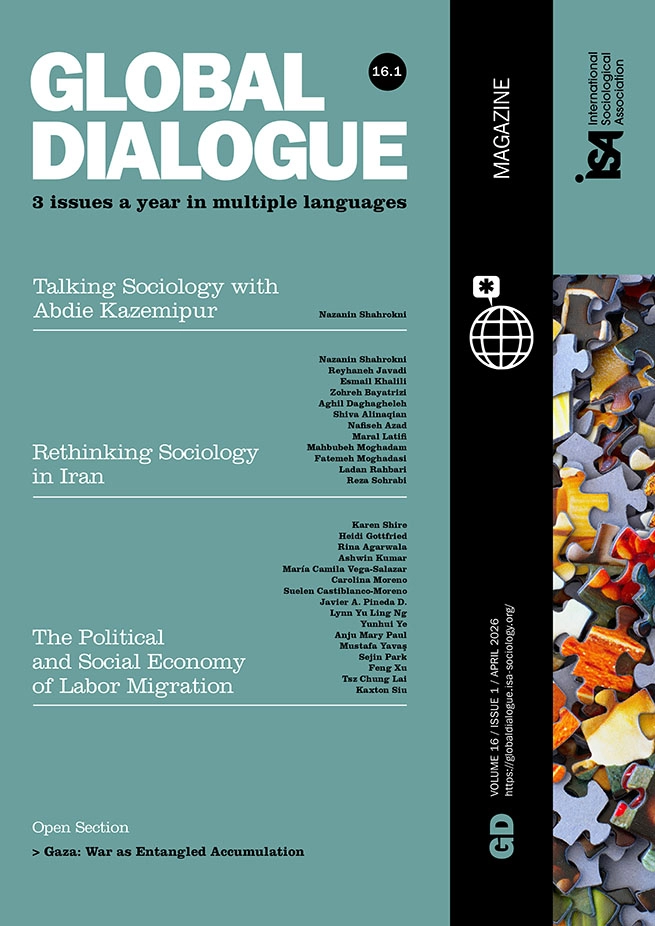
After the previous issue which was a collective tribute to the intellectual, political, and human legacy of Global Dialogue’s founding editor Michael Burawoy, this new issue returns to its regular structure. It does so in direct conversation with two pressing concerns that shape our historical moment: the situation in Iran and the global transformations associated with labor migration.
The ‘Talking Sociology’ section opens the issue with an interview conducted by Nazanin Shahrokni with Abdolmohammad (Abdie) Kazemipur, reflecting on debates around national sociologies, social change, the challenging boundaries between the sacred and the secular, and the evolving questions shaping Iranian sociology today.
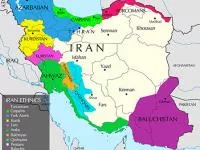
This conversation is followed by a rich set of contributions in the ‘Rethinking Sociology in Iran’ section, carefully edited by Nazanin Shahrokni and Reyhaneh Javadi, which brings into focus the tensions and paradoxes of doing sociology in contexts marked by political repression, epistemic surveillance, and deep cultural contestations. From the public relevance of sociology and the (non-)institutionalization of the field, to the privatization of teaching, the ethnic question, the struggles over gender studies, and the constraints on critical research, this section offers a multifaceted look at the challenges facing Iranian sociology today. It also features a dynamic roundtable that gathers scholars situated across multiple geographies, contributing to a situated and collective portrait of knowledge production on and from Iran.
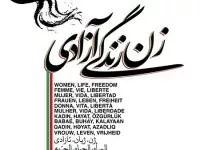
In a moment when Iran once again occupies headlines across the world – often framed through selective narratives, geopolitical simplifications, or narrow security lenses – it becomes even more crucial to engage with grounded, public, and global sociological perspectives. Beyond the images circulating in mainstream media, Iranian society is marked by complex forms of political contestation, vibrant intellectual traditions, everyday struggles for dignity, and shifting configurations of state power and social mobilization. Understanding these dynamics requires listening to scholars who work in, on, and with Iran, and who are able to situate current events within broader histories of repression, resistance, knowledge production, and social transformation. Although this section is not devoted to analyzing the most recent events, it greatly contributes to offering a broader, historically grounded understanding of the situation.
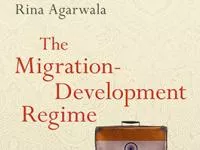
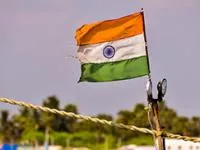
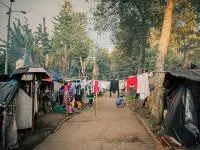
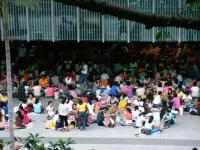
The second major section, ‘The Political and Social Economy of Labor Migration,’ edited by Karen A. Shire, Heidi Gottfried, and Rina Agarwala, examines one of the defining issues of our era: the centrality of labor migration in the reorganization of global capitalism. From “safe and orderly” mobility programs in India, to global care chains connecting Venezuela and Colombia, to systems of migrant labor in China, Singapore, Dubai, and Cambodia, the contributions show how inequality, gender, ethnicity, borders, and state power intersect in producing new forms of precarity – and new possibilities for agency and resistance.
In the ‘Open Section’, the issue closes with a powerful analysis by Guilherme Leite Gonçalves on the war in Gaza, interpreted as a form of entangled accumulation rooted in political, economic, and colonial dynamics that extend far beyond the battlefield.
With this issue, Global Dialogue renews its commitment to a public and global sociology capable of analyzing contemporary processes through situated, plural, and dialogical perspectives. We hope that the reflections, debates, and research gathered here help broaden conversations, strengthen networks, and open new questions in a world shaped by inequalities, violence, and displacement – but also by resistance, critical imagination, and collective efforts toward more just futures.
Breno Bringel, editor of Global Dialogue
Global Dialogue can be found in multiple languages.
Submissions should be sent to globaldialogue@isa-sociology.org.