
The Fetish of the Particular, and the Sacred as Secular: An Interview with Abdie Kazemipur
March 20, 2026
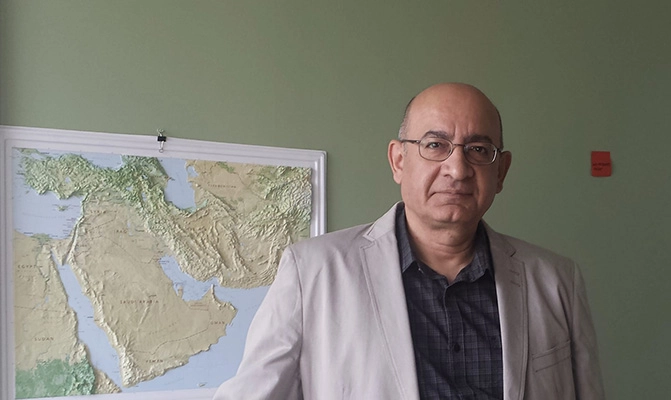
Debates over the global dynamics of sociological knowledge production have intensified in recent years, with growing interest in “national sociologies,” “Southern theory,” and “regional traditions.” Iran offers fertile ground for these discussions, as explored in an interview with Dr. Abdolmohammad (Abdie) Kazemipur, Professor of Sociology and Chair of Ethnic Studies at the University of Calgary and former president of the Canadian Sociological Association. His recent work examines how the sacred and secular intersect in modern Iran and how migration is reshaping its social landscape. In this wide-ranging conversation, Dr. Kazemipur reflects on the state of Iranian sociology – its challenges, contributions, and the pursuit of a locally rooted yet globally engaged discipline. He is interviewed here by Dr. Nazanin Shahrokni, Associate Professor of International Studies at Simon Fraser University in Canada.
Nazanin Shahrokni (NS): Many sociologists have challenged the idea of a “universal” sociology, pointing out that what has long been presented as universal is, in fact, a particular tradition rooted in European and North American experiences. In response, the turn to particularity – through national sociologies, regional approaches, and Southern theory – seeks to foreground alternative epistemologies. How do you view this turn, and what does it mean to speak of a “national sociology” in the Iranian context?
Abdie Kazemipur (AK): I find the distinction problematic, both descriptively and prescriptively. While national or regional sociologies rightly challenge dominant paradigms, they can also reproduce the exclusions they oppose – essentializing contexts or replacing one universality with another. Arguing against universalism is now uncontroversial, but we risk a new “fetishism of the particular.”
First, each “particular” contains internal diversity. Claiming to speak for all its subcategories repeats the same error as universalism. Iran and Turkey – neither directly colonized – cannot be readily grouped with formerly colonized countries such as Algeria, India, or Egypt, and even within the Arab Middle East, as Sari Hanafi notes, eastern and western parts of the region differ markedly.
Second, framing “national sociology” or Southern theory mainly as opposition to Northern paradigms often serves identity-centered political goals more than epistemological ones. This can elevate symbolic figures whose revolutionary appeal fades over time. For instance, Raewyn Connell cites Ali Shari’ati as a key voice against Western cultural imperialism before Iran’s 1979 Revolution. Yet his intellectual influence waned soon after, showing how identity claims may mobilize politically but contribute little to the sustained growth of sociological knowledge.
NS: Given your concerns about the fetishism of the particular, do you think we should abandon the idea of national sociologies altogether? Is the concept of something like an “Iranian sociology” analytically useful, or does it risk reinforcing the very epistemological divides it seeks to overcome?
AK: National sociologies do exist and should exist, but not as theoretical enclaves. Their value lies not in claiming distinct theories or methods, but in generating distinct questions rooted in the specific conditions of their societies. “Good” sociology begins with clearly defined, locally grounded questions; and answering them requires drawing on all available intellectual resources – Northern or Southern, Eastern or Western – without disqualifying any a priori. Such answers emerge from long processes of negotiation between ideas and realities, and from exchanges across intellectual traditions. We should therefore practice theoretical agnosticism and eclecticism – embracing concepts from multiple traditions rather than sacralizing or dismissing particular theories.
NS: Let me follow up with two questions. You suggest that the value of national sociologies lies in the questions they ask, rather than in advancing distinct theories. But as feminist sociologists have long argued, there’s no neutral standpoint: the questions we pose are conditioned by the conceptual tools and analytic lenses available to us. Dominant paradigms can preclude certain questions from even being asked. From that perspective, national or regional sociologies aren’t just about posing local questions, but also about developing alternative frameworks that make new kinds of inquiry possible. How do you respond to that?
AK: I agree, but I think it works both ways. Just as so-called “universalist” perspectives can limit the questions we are able to ask, so too can “national” perspectives foreclose other lines of inquiry. This tension has been especially evident in feminist scholarship. While the universalist stance of certain strands of feminism in the Global North has often blinded them to alternative problems and theoretical possibilities emerging from the South, much feminist awareness in the South has in fact been shaped by engagement with feminist agendas rooted in the North. This is precisely why sustained and active dialogue across perspectives is essential.
NS: Building on that, since you emphasize that national sociologies emerge through the questions they raise, could you speak to the kinds of questions and themes that have defined Iranian sociology in recent decades?
AK: Iranian society has undergone extraordinary changes over the past 50–60 years, shaping the questions sociologists have pursued. These include rapid state-led modernization and secularization in the pre-revolutionary period; the unexpected rise of religion as a powerful political and personal force during the 1979 Islamic Revolution, which mobilized roughly 10% of the population; and the Iran–Iraq War: the longest of the twentieth century.
Recent decades have seen both secularization – either abandoning religion altogether or embracing a personalized spirituality free from institutions, rituals, clerical hierarchy, and theology – and a form of secularism in which religion is subservient to the state; an unintended result of their merger under aggressive Islamization.
Iran also has a unique migration profile: it is both a major migrant-sending and migrant-receiving country, hosting about 4.5 million refugees (roughly 5% of the population) while some 8 million Iranians live abroad (around 9%). Surveys suggest over half the population would emigrate if possible, making Iran a rare case for studying immigration and emigration simultaneously.
Finally, a powerful and authentic women’s movement has emerged in response to systemic gender inequalities and cultural patriarchy, reshaping the nature, scope, and demands of social movements in the country. These interesting and intersecting dynamics – ideological shifts, religious change, war, migration, and gender – have fueled vibrant sociological inquiry within Iran and among the Iranian diaspora, particularly in the sociology of migration, identity, gender, and social capital.
NS: Given this dynamic history, what do you see as the most significant obstacles to the growth of sociology in Iran today, and how do these challenges shape the kinds of questions that can, or cannot, be asked?
AK: The greatest challenge is the state’s restriction on free inquiry. Dr. Saeed Madani, a leading sociologist of social problems, is currently in prison; Dr. Fariba Adelkhah, a France-based anthropologist, spent several years in jail before her release. Many others have been expelled from universities, yet they continue to produce exceptional work.
Closely tied to this is the continued primacy of the state and the “political” in the intellectual imagination of Iranians, including many social scientists. This preoccupation has tended to overshadow the “social” itself, limiting the kinds of questions that are posed and the analytical directions that are pursued. In particular, there is a dearth of research on community empowerment or locally based initiatives in a situation where the state is unwilling or unable to function as expected.
Another obstacle is a dual pathology: excessive fascination with theory – almost fetishism – paired with atheoretical empirical work, what C. Wright Mills called “abstract empiricism.” Iranian sociology needs more theory-driven empirical research that is both grounded and conceptually robust.
Finally, Iranian sociology remains largely disengaged from global sociology and from comparative research – even with regionally and/or historically comparable contexts such as Turkey, Egypt, and Saudi Arabia.
That said, emerging mechanisms are connecting Iranian sociology to broader scholarly conversations. A growing cohort of younger, often second-generation immigrant sociologists based outside Iran brings fresh energy and curiosity to the study of Iranian society. While sometimes romanticized, their work has been crucial in translating Iran’s social realities for global audiences and raising the field’s international visibility. Another is the vibrant translation movement within Iran, which has made both classic and contemporary sociological works available in Persian with remarkable speed. This has significantly shaped local academic discourse and exposed Iranian scholars to global debates – though still largely at the level of reception rather than contribution.
NS: That translation movement is certainly impressive, but it also highlights a deeper asymmetry: the flow of translation remains largely unidirectional. Works produced outside Iran – especially in English – are translated into Persian, while very little sociological work produced in Persian is translated outward, nor is there much uptake of Arabic, Turkish, Kurdish, or other regional sociologies within Iran. This linguistic and epistemic imbalance raises broader questions. With that in mind, how do you see Iran’s place within the broader project of Global South sociology, and particularly in relation to Middle Eastern sociology?
AK: You are right: this one-way flow is unhealthy for Iranian sociology. Iranian sociological associations could help by building more systematic, regular ties with counterparts in the region and beyond, benefiting both sides.
As Michael Burawoy has argued, national sociologies, like personal identities, are formed relationally and come to understand themselves through engagement with others. In his words: “We can no longer project the particular – whether it be the US or France, men or colonizers – as the universal. Yet nor can we fall back into a swamp of disconnected particularisms. Global sociology has to be built on a dialogue among particularisms.”
Tweaking a remark by Michel Foucault, the future of sociology lies in spaces of encounter – where Europe and non-Europe, West and East, North and South, and the diverse parts within each meet and unsettle one another. Iranian sociology’s contribution to that future depends on cultivating a discipline grounded in real, context-specific questions: neither trapped in imported theoretical models nor reduced to national exceptionalism.
Nazanin Shahrokni <nazanin_shahrokni@sfu.ca>