
Under Constraint: Sociological Research on Iran. A Roundtable
March 20, 2026
This roundtable brings together six sociologists working on Iran, situated within distinct academic fields and institutional contexts across varied geopolitical locations. While united by their disciplinary training in sociology, the contributors bring divergent positionalities shaped by their locations within and outside Iran, producing knowledge across national, linguistic, and institutional boundaries. The roundtable engages three key methodological questions probing the challenges, innovations, and ethical dilemmas of conducting sociological research on Iran. Though their research spans a range of topics, including urban life, educational policy, digital activism, and environmental justice, all the contributors share a commitment to grounded, critical, and reflexively engaged inquiry. Each navigates the complex terrain of researching Iranian society amid political restriction, epistemic erasure, institutional constraints, and global hierarchies of knowledge production. The contributors can be briefly described as follows.
Nafiseh Azad is a social researcher based in Iran whose work focuses on gender and urban life through qualitative methodologies. Maral Latifi, an Iran-based researcher of urban marginality and social suffering, examines downward mobility in Tehran. Mahbubeh Moqadam, a PhD candidate at the University of Illinois (USA), draws on transnational feminist theory to study youth activism, aesthetics, and political subjectivity. Fatemeh Moghadasi, a scholar of education and social policy based in Iran, examines the privatization of education, child labor, and anti-poverty initiatives. Ladan Rahbari, an associate professor of sociology at the University of Amsterdam (the Netherlands), explores (digital) discourse and the politics of gender and resistance. Reza Sohrabi, a PhD candidate at Carleton University, Ottawa (Canada), investigates environmental politics and water scarcity.
Together, these scholars engage with three core issues: how to navigate the methodological constraints of studying Iran under conditions of surveillance and restricted access; what ethical frameworks guide their work amid political sensitivities and risk; and how global power dynamics shapes the conditions and hierarchies of knowledge production. These questions were posed by Reyhaneh Javadi and Nazanin Shahrokni, who framed the conversation and guided the dialogue.
Reyhaneh Javadi (RJ) and Nazanin Shahrokni (NS): Let us start with the challenges that shape the very possibility of research. What is one specific methodological obstacle you have encountered in conducting research on Iran, and how did you navigate or adapt to it? What broader insights does this experience offer about the practice of sociology in politically constrained or opaque contexts?
Nafiseh Azad: My recent research focuses on the intersection of women and urban life, using qualitative methods to explore women’s lived experiences. Two persistent obstacles have shaped this work: limited access to data and the heightened political sensitivity surrounding women’s issues in Iran.
Access to reliable data remains a major challenge across social research, especially in gender-related fields. Key statistics – such as those on self-immolation or honor killings – are often classified or inaccessible. By triangulating data from the Statistical Center of Iran and figures released by semi-governmental or private organizations, I have been able to extract partial insights despite these constraints.
The second obstacle stems from the widening gap between official and public culture in Iran, which has eroded both the possibility and infrastructure for independent national-level research. Independent institutes willing to engage with sensitive topics are few, but they offer crucial opportunities outside the university system. My most recent study on women’s economic agency was conducted through one such institute.
Political sensitivities continue to impose thematic limitations: some topics remain off-limits. Nonetheless, by focusing on accessible populations and domains, and by innovating methodologically, I have been able to generate in-depth qualitative data with broader sociological implications. While public dissemination remains limited, especially outside academic journals, this approach has allowed me to sustain critical inquiry under restrictive conditions.
Fatemeh Moghadasi: Nafiseh’s reflections on the difficulty of accessing reliable data on women’s issues resonate with my own experience in researching social policymaking. In my work, the obstacles I’ve encountered are less about cultural taboos and more about deep-rooted institutional limitations that structure the field itself.
Social policymaking depends on sustained interaction between researchers and policymakers, yet in Iran, this relationship is notably weak. The dominance of abstract, philosophical approaches, coupled with minimal demand from policymakers for empirical research, has isolated researchers and severed the link between knowledge production and policy action. This disconnect has shaped my research on educational inequality and the privatization of public education, where I’ve repeatedly encountered methodological barriers.
First, there is the issue of access to micro-level data. To analyze educational inequality effectively, one needs data that reflects students’ individual, familial, and environmental contexts. In Iran, such data is scarce, inconsistently reported, and typically available only at national or provincial levels. Formal mechanisms for accessing detailed data through institutions like the Ministry of Education are largely absent or ineffective. This pushes researchers to rely on informal channels and personal networks – methods that are not only unsustainable but ethically fraught.
Second, government control over survey data presents a significant obstacle. Since the 1990s, numerous large-scale national and smaller attitudinal surveys have been conducted, mostly funded by public institutions. Yet the resulting data remains inaccessible to independent researchers. This monopolization of field data contributes to a broader scarcity of reliable sources in Iranian social science.
Finally, access to the research field itself is increasingly restricted. Even when working with official permissions from ministries, efforts to conduct in-school observations, interviews, or other forms of data collection are often met with bureaucratic hurdles or suspicion. The educational environment is treated as a politically sensitive space, making it difficult to carry out even basic empirical work. As a result, researchers are often forced to rely on documents or secondary analysis, limiting the scope and depth of qualitative inquiry.
These constraints not only shape what kinds of questions can be asked but also influence the very possibility of doing meaningful, evidence-based policy research in Iran.
Ladan Rahbari: Like Fatemeh, I have also struggled with inaccessible or incomplete data, but the institutional distance she describes takes on different contours when one is working from the diaspora and has no easy or safe access to the field. Conducting research from outside Iran adds an additional layer of complexity. I can give you an example of this from my work on digital discourses of resistance and dissent.
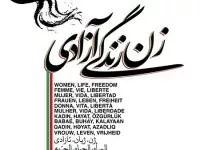
In one of my current projects, I am analyzing Farsi-language Twitter posts that circulated during and after the “Woman, Life, Freedom” uprising in 2022. It took time for me to make sociological sense of the uprising and to feel ready to study it, especially as a researcher who feels proximity to the topic in a professional and personal sense, but is living far from the center of events, in the Netherlands.
My focus in this specific project has been on how Farsi-speaking users express their sentiments toward religion. A persistent methodological challenge that I have faced has been disentangling critiques of Islam as a faith from criticisms of the Islamic Republic as a political system. This is an analytical difficulty that may be familiar to many working on Iran and on popular political discourse on religion and religiosity. I have seen a tendency to overinterpret the data in favor of one of the two sides of the spectrum.
If I had direct access to the field, I would complement discourse analysis with a large-scale qualitative–quantitative survey to clarify intents and interpretations further. I know that remote surveys are technically possible but conducting them using online tools from another country introduces numerous complications and biases. Additionally, as scholars of Iran know quite well, the diaspora cannot serve as a reliable proxy for the broader Iranian population. So, I only have imperfect tools to work with.
There are of course ways to overcome these challenges. I have to, for instance, rely on alternative methods such as making use of co-readers and collaborative interpretation as well as member-checking techniques. But even so, I still believe that these strategies, valuable as they are, cannot fully substitute for the rigor and reach of a solid and representative survey done in Iran. A targeted remote member-checking method can probably help to some extent; but it cannot fully resolve interpretive ambiguities. This is only one recent example of the many methodological limitations and challenges I must recognize and work through in my research.
Mahbubeh Moqadam: Echoing Ladan’s concerns about distance from the field and the constraints imposed by travel restrictions, I’ve had to redefine what it means to “be in the field.” One of the most significant methodological challenges I’ve faced in researching the role of Gen Z in the Woman, Life, Freedom movement has been my inability to travel to Iran and conduct in-person fieldwork. This limitation has restricted access to everyday interactions and informal conversations that are crucial for ethnographic research.
The movement catalyzed youth-led protests across Iran against gender-based violence and authoritarian rule. Rather than abandoning the topic, I turned to digital ethnography. I have been training myself in this method and have begun systematically collecting data from social media platforms, news coverage, and digital archives. To enrich this digital approach, I’ve been building a trust network through snowball sampling – conducting online interviews and informal conversations with individuals currently in Iran, as well as those who have recently left the country. I also speak regularly with people who travel between Iran and the U.S., asking them targeted questions and gathering their observations. Friends in Iran help me access recent research and academic dissertations.
Although the project is still in its early stages, this adaptive, multi-source strategy has enabled me to gather insights into the everyday lives and perspectives of the local actors I study, offering a more grounded and nuanced understanding of the field despite physical absence.
Reza Sohrabi: Mahbubeh’s turn to digital ethnography and anecdotal accounts reminds me how much access today hinges not only on relationships with participants, but with methods themselves. In my case, trust-building was not merely a prerequisite to research, it became a method in its own right.
My PhD research focuses on water scarcity and social movements in Iran. It is a comparative study of Isfahan and Khuzestan provinces, where I interview scholars, activists, and farmers about the politics of water. Fieldwork constraints have been especially pronounced, particularly when it comes to recruiting participants.
Like Mahbubeh, studying from abroad has made trust-building crucial to securing interviews. To navigate this, I relied heavily on snowball sampling: soliciting suggestions and recommendations without indicating whether I would follow up, in order to protect anonymity. I also found community engagement to be a particularly effective strategy. Establishing open communication with participants before the interview helped convey the academic nature and purpose of my project. Once they understood the significance of their contributions, many became eager to participate.
In politically sensitive contexts, research requires locally grounded approaches: ones that depend on participants’ trust in the researcher and their belief in the value of the project. For me, communication and community engagement emerged not just as tools for access, but as central components of doing research ethically and effectively under constraint.
Maral Latifi: What Reza highlights about the fragility of trust in sensitive research settings is absolutely vital. My doctoral dissertation examined the downward mobility of middle-income groups in Tehran through a Bourdieusian framework, focusing on the entanglement between social suffering and spatial displacement under Iran’s recent economic crises. Empirically, the research drew on 32 interviews with individuals navigating this trajectory, with 25 forming the analytic core. Two central methodological challenges necessitated a reflexive, relational Bourdieusian approach. First, participants were asked to articulate chronic and sedimented forms of social suffering – what Bourdieu called misère du monde – that unfolded over many years. Second, these experiences were closely tied to processes of pauperization, which, for the middle classes, carry particular stigma.
This dual bind risked reducing interviews to formulaic exchanges or, more critically, reproducing structural violence within the research encounter itself. A careful, trust-based methodology was essential to ethically engage with these narratives of loss and displacement.
RJ & NS: What emerges from your reflections is that method is never merely a matter of technique, it is shaped by the conditions in which research unfolds: where access is precarious, information is withheld, and the field itself remains unstable. Given these conditions, in your work on Iran, how have you navigated the ethical tensions related to risk, whether for yourself, your interlocutors, or your data? What ethical principles have guided your decisions, and in what ways might they complicate or challenge dominant frameworks of research ethics?
Ladan Rahbari: Like many sociologists working on Iran, I continuously grapple with complex questions of safety and confidentiality for my interlocutors, and also for myself and other researchers working with or for me. But one of the most consequential challenges I have recently faced came not from the field of study itself, or from the Iranian state, but from my own university’s ethics review process.
After applying and securing funding for the project that I described in my earlier comment, my university’s ethics board flagged it as high-risk, based on the assumption that any contact with Iranian people could trigger the Iranian state’s (remote) surveillance apparatus to target me, my institution, and also the online social media users I study. I acknowledge that these concerns were not entirely unfounded, and I also certainly share some of them. But the protocols proposed to mitigate these safety issues were not well informed and would have rendered the research extremely difficult or nearly impossible.
One recommendation was to obtain informed consent from all social media users in the rather large dataset that I wanted to work with. This would be an unfeasible task and would also be counterproductive as it would potentially further endanger those users because of coming in direct contact with me. Another was to conduct all analysis in a hyper-securitized digital environment and immediately delete the data, which would have prevented me from revisiting the material or verifying my findings.
After months of negotiating, I eventually received approval to go ahead. This was a long process that delayed the start of the project by months. After going through the process, I was truly disheartened and chose not to collect new data. Instead, I used an existing dataset compiled by a colleague at another university in the Netherlands who had already secured ethical approval from their university. I was very lucky such a dataset already existed.
I share this story to show how (Western) institutional ethics frameworks can themselves end up functioning as tools of securitization, especially when dealing with research centered on the so-called non-Western contexts perceived as “sensitive” and “high-risk” areas. Such processes, even though well-intentioned, risk curtailing academic freedom, particularly for migrant and diasporic scholars like me, by leading to self-censorship or discouraging scholars to the point that they end up changing research topics or strategies altogether.
Mahbubeh Moqadam: The institutional securitization Ladan describes resonates with a related ethical bind I often face in my own work. In my research on Gen Z’s digital activism in Iran, ethical tensions frequently arise around visibility and risk.
One notable case involved a teenage girl whose public Instagram content became emblematic during the Woman, Life, Freedom movement. Although her posts were widely shared, I chose not to cite them directly. Instead, I anonymized and paraphrased her content, incorporating it into composite narratives to prevent re-identification. I’ve consistently prioritized participant safety and consent over the perceived “completeness” of data. While some ethics frameworks regard public data as neutral, I cannot ignore the dangers of hypervisibility in such a politically sensitive context.
After the crackdown on the movement, the girl deleted many of her posts and stories. The tone of her profile changed noticeably; her Instagram highlights and Telegram posts shifted from sociopolitical commentary to humor and trivia. This shift underscored the real risks of exposure.
Additional ethical concerns surfaced during online interviews with participants inside Iran. I used encrypted platforms like Signal, avoided recording conversations unless explicitly permitted, and ensured full anonymity. These practices are not just technical choices but ethical commitments shaped by the precarious conditions in which both researchers and participants operate.
Reza Sohrabi: Mahbubeh’s attention to visibility brings to mind a broader tension many of us face: how to preserve the integrity of participants’ narratives without increasing their vulnerability. In my research, I addressed this ethical challenge through a flexible, participant-centered approach that allowed individuals to assess and shape the interview process as it unfolded.
Conducting anonymous interviews proved essential. It enabled participants to speak more freely, without fear of repercussions. Anonymity significantly reduced the anxiety many felt while articulating their views. In one instance, an activist shared a detailed critique of government water management policies. Although the conversation was open, the participant later expressed concern about whether their comments might be traceable. After discussing the risks, they felt reassured that their opinion was not identifiable, and gave consent to include it.
Still, I took further steps to enhance anonymity, omitting specific temporal and geographic references to minimize the risk of exposure. This allowed me to retain the substance of the narrative while protecting the participant’s identity.
This experience underscored for me that ethical research, especially in politically sensitive settings, requires not only attentiveness to the ethics of visibility but also a commitment to participant safety as integral to the work itself. Flexibility and responsiveness to participants’ concerns were key to fostering a space of trust, and ultimately, to making the research possible.
Maral Latifi: Like Reza, I’ve come to understand ethics not as a checklist but as an ongoing relationship. For me, this required rethinking not only anonymity but also the very grammar of engagement with participants. Ethically resisting the objectification of participants meant shifting from an externalizing “you” to a collective, empathetic “we.”
Following Bourdieu’s approach in The Weight of the World, I recruited participants through trusted social networks – either direct acquaintances or referrals. This strategy reduced symbolic distance and created the conditions for sharing stigmatized experiences. It was further reinforced by my own biographical proximity, having experienced forms of spatial demotion myself. These affinities helped foster mutual understanding and enabled more nuanced interpretation.
Yet the very conditions that facilitated trust and access also complicated anonymization and demanded methodological adaptation. For example, I opted to forgo biographical portraiture – which might have better captured the relational depth of participants’ suffering – in favor of thematic analysis, which offered greater protection of identity, even if at the expense of narrative coherence.
Fatemeh Moghadasi: Maral’s point about proximity and risk highlights a dilemma I often face: the very trust and intimacy that underpin ethical research can come into conflict with state institutions that view critical inquiry as a political threat. While academia offers researchers a degree of freedom in selecting topics and methods, that freedom quickly narrows when research moves beyond academic boundaries – whether through collaboration with state institutions or the public dissemination of findings. These limitations are not merely technical or bureaucratic; they are deeply ethical and ideological.
In the field of educational policymaking, critique is generally tolerated when directed at managerial inefficiencies or executive shortcomings. But when it challenges deeper issues – such as the ideological underpinnings of the education system, the normative values embedded in schools, or questions of linguistic, cultural, and political justice – it often provokes responses rooted not in scholarly engagement but in ideological vigilance or political control.
In such an environment, structural critique is rarely welcomed. It is frequently dismissed as “political maneuvering” or accused of “undermining national institutions.” These conditions place the researcher in a difficult ethical position, requiring constant negotiation between scientific integrity, field access, and personal or professional safety, particularly in justice-oriented research, which entails its own distinct risks and complexities.
Nafiseh Azad: Fatemeh’s reflections on the politicization of research freedom resonate with my work in women’s studies, where concerns around safety and consent shape every stage of the process. Given my reliance on ethnographic methods and purposive sampling, anonymity is essential; especially in research on women. I use a range of techniques to safeguard participants, including anonymized data storage, removal of identifying details, and deleting interviews after the research is completed. Participants can withdraw their interviews at any point – fully or partially – and may request that I stop recording at any time. I take every possible measure to ensure their safety. I avoid sharing interviews via messaging apps or email and only share them with other members of the research team when participants give explicit consent.
In some cases, I have declined to submit research to commissioning bodies when participants did not agree to share original interviews. In others, I’ve assumed full responsibility for my written analysis to avoid revealing the names or locations of participating women. These precautions are even more challenging outside the university system, where institutional protections and resources are limited.
Perhaps the most painful and unavoidable aspect of this work is that I sometimes abandon entire research areas preemptively – when I feel I cannot ensure the safety of the data, that of the participants, or my own safety in disseminating the findings.
RJ & NS: And yet these ethical and methodological tensions are not merely local, they are embedded in global power structures and shaped by the politics of knowledge. From which questions can be asked to whose narratives are deemed credible, power determines what counts as research. How do global dynamics, such as sanctions, diaspora positionality, or Western academic expectations, shape the production, circulation, and reception of sociological knowledge on Iran?
Maral Latifi: A further, less visible impediment to sociological knowledge production in Iran is the prevailing demand that sociological scholarship address immediate political developments or predict final results of collective protests. This imperative, rooted in the discourse of “society-in-transition,” subtly discourages foundational research into the dynamics of social space. Ironically, such pressures constrain the emergence of an Iranian sociology capable of offering a nuanced elucidation of the present and imagining possible social futures.
Fatemeh Moghadasi: Building on Maral’s point, I’ve found that even efforts to pursue long-term or foundational research are often blocked by structural funding constraints. One major obstacle to sociological research in Iran is the reliance of universities and research centers on commissioned projects, usually funded by government or semi-government institutions. These projects follow a “request and response” model, leaving little room for independent or long-term inquiry.
In my experience, I’ve drafted proposals on pressing social issues that were never realized due to a lack of funding. This not only wastes research potential but also undermines motivation and diminishes the quality of knowledge production.
Internationally, Iran is rarely prioritized as a case study in social policymaking. Research agendas in MENA-focused institutions tend to align with the interests of international bodies or favor cases with easier access to data. As a result, Iranian issues are often sidelined or reduced to geopolitical and security frames.
This gap is evident in the literature on education privatization. Countries like Afghanistan and Iraq – despite facing crises – are frequently analyzed, while Iran, despite undergoing significant policy shifts, remains largely absent. This is partly due to the lack of a transparent data system and the absence of sustained international collaborations, which make Iran difficult to position as an “analyzable” subject within transnational research frameworks.
Reza Sohrabi: Expanding on Fatemeh’s point about structural exclusions, I want to highlight how international sanctions reshape even the most basic logistics of academic research, particularly for scholars in the diaspora. US economic sanctions on Iran impact researchers in multiple ways. During fieldwork, I was unable to provide financial support or send gifts to participants, as international transactions, including gift cards, were blocked.
I also applied for an external research grant, but my application was never assessed because my fieldwork was based in Iran. The justification cited a prohibition on research in “war zones” – a designation that included Iran, despite the absence of active conflict in recent years. This reflects how broader militarized imaginaries of the Middle East and the Global South shape Western classifications, misrepresenting realities on the ground and excluding diaspora scholars from essential resources.
Such experiences reveal the distinct limitations faced by researchers working from the diaspora, including restricted mobility, a lack of funding access, and structural academic hurdles not encountered by those working in less-politicized contexts.
Nafiseh Azad: The isolation Reza refers to is not only material, it is deeply intellectual. Speaking from within Iran, I experience a suffocating isolation shaped by both international sanctions and domestic restrictions. Sanctions have limited access to academic resources, training programs, and essential research tools. Participation in international conferences is often blocked by visa denials, and in recent years, it has become virtually impossible. These barriers are compounded by the Iranian government’s own restrictions on attending international events, leading to a pervasive isolation of Iranian scholars; an isolation that is not emerging, but already entrenched.
Even more troubling, however, are the expectations and biases of Western academic institutions, which often obscure the complexities and diversity of Iranian society, especially in relation to women. Stereotypical views of Middle Eastern Muslim women continue to shape the perceptions of journal reviewers and editors. One of my recent articles was rejected by a prominent gender studies journal because the findings were deemed incomprehensible or unacceptable. I believe this stemmed from a dissonance between my research and dominant Western narratives about Muslim women. Expressions of agency, resistance, or alternative approaches to family and motherhood are frequently questioned at a fundamental level.
Throughout the review process, I increasingly felt treated not as a researcher but as a data collector. In another article – eventually published after extensive revisions – I had the distinct impression that reviewers, despite never having been to Iran, felt they understood Iranian women better than I did. Attempts to represent women in all their diversity and transformation often encounter serious resistance in global academic spaces. This issue is even more pronounced in conference settings, where similar dynamics unfold. Unfortunately, some Iranian scholars in Western institutions reinforce these dynamics, assessing their peers’ work through the same exoticizing lens. Yet what emerges from deep fieldwork are women whose lives and choices defy these reductive narratives.
Ladan Rahbari: I want to shift the focus to the politics of voice and credibility in diasporic spaces, particularly within the Western academy. As an academic who is part of the vast Iranian diaspora and is somewhat empowered by institutional resources, I am both shielded from the Iranian state’s oppression and enjoy a degree of support that not everybody has access to. Although I am not safe from remote surveillance or harassment, I face other forms of gatekeeping, both within academic institutions and sadly, also in diasporic Iranian circles.
I have also noticed that certain types of voices, especially those perceived as West-leaning secular (sometimes self-proclaimed) experts, are more easily embraced in Western contexts. They are also the ones which tend to reproduce colonial or orientalist narratives of Western saviorism. In such an environment, it is difficult to be heard when certain and sometimes dominant diasporic narratives have already shaped the frameworks accepted or favored.
This makes it even more important to produce grounded and empirical scholarship. Yet, as I mentioned in my earlier comment, hyper-securitized research protocols pose serious obstacles, not only to data collection and handling but to the broader process of knowledge production. I can also relate to what Nafiseh says about how institutions work within already established epistemological paradigms and are not so flexible when it comes to alternative knowledge or forms of knowledge-making. What I think we need to do is to reject the approach that sees us as data mines to prove already established Western theories: the Iranian context has its own specificities and is best knowable through a combination of knowledge repertoires that are local, regional and yes, also sometimes transnational. What we need most now is rigorous, nuanced research that resists reductive, imported, repeated and often tired framings.
I say all of this, but I also know that this is not easy. There are institutional and neoliberal pressures to simplify political and social realities in Iran. And not all of it can be blamed on the structures. Academics are, like everyone else, part of a benefit-driven capitalist market, and sometimes making difficult “choices” is costly. Navigating these challenges, alongside methodological and ethical constraints, disciplinary norms, diaspora politics, and persistent gatekeeping is really and truly exhausting. For a lot of (especially early-career) academics, who are trying to survive in the brutal job market, such epistemological decisions are entangled with one’s personal life. As we sociologists love to say: it’s complicated.
Mahbubeh Moqadam: Ladan’s reflection on exhaustion deeply resonates with me. In my own work, I’ve seen how dominant epistemologies narrow what counts as valuable knowledge. I ground my research in transnational feminist and anti-colonial approaches, treating global power dynamics not as external constraints but as central to how knowledge on Iran is produced, circulated, and received.
As a diasporic scholar, I benefit from forms of visibility – platforms, language access, and publication opportunities – often denied to those whose lives and resistance I study. Yet sanctions, US–Iran tensions, censorship, and surveillance continue to limit my access to archives, fieldwork, and collaboration with scholars in Iran.
At the same time, Western academia tends to privilege liberal and institutional forms of knowledge – centered on legality, policy, or reform – while overlooking the political significance of affect, memory, aesthetics, and everyday resistance. My work insists that these less legible practices are politically vital. This is not just a theoretical stance, but a reflection of Iran’s specific conditions and the creative strategies of struggle that arise within them.
It is also an ethical commitment to resist extractive frameworks and center forms of knowing rooted in embodied experience. This is a feminist refusal to render research legible only on terms defined by the Global North.