
Situated Lives, Contested Knowledge: Reclaiming Gender Studies in Iran
March 20, 2026
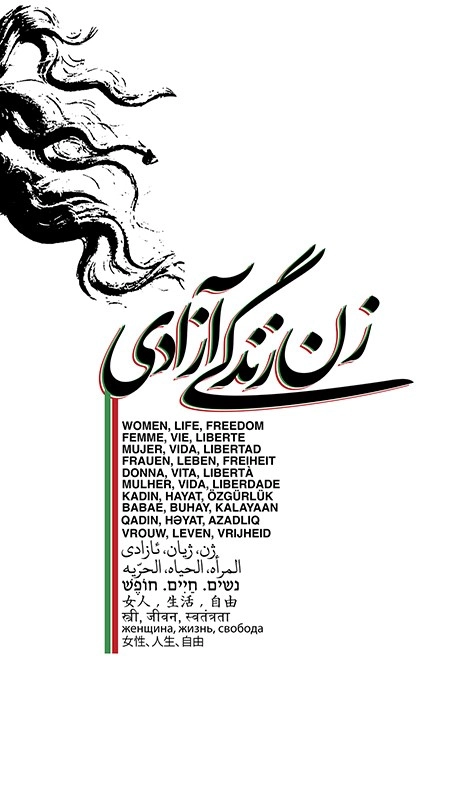
During the eight years I taught courses on gender, ethnography, and narrative in Tehran’s universities, my personal experience was continually entangled with institutional constraints and everyday politics. Being dismissed from my teaching position in 2022 – at the very moment the Woman, Life, Freedom (Jina) uprising unfolded – did not simply mark a personal rupture, it laid bare how the production of critical knowledge on gender in Iran is inseparable from power relations and forms of everyday resistance. In these conditions, even small pedagogical decisions – inviting students to write mini-ethnographies, foregrounding lived experience, or discussing global feminist theories alongside local narratives – become deeply political: they destabilize the institutional expectation that gender remain confined to legal–administrative or “safe” family policy frameworks.
The classroom, then, is not a protected academic space; it is a site where state disciplinary logics collide with students’ desire to make sense of their own lives. My dismissal simply made visible what many instructors already knew: gender knowledge in Iran is precarious because it emerges from everyday life, not despite it.
A chronology of gender studies in Iran: a discipline built from above
To understand the stakes of the teaching practices deployed in gender studies in Iran, one must situate them within the local history of the field. Gender studies did not arise in Iran in an open or autonomous academic environment, but developed in a context where the social sciences were already heavily constrained and politically monitored. The shadow of the Cultural Revolution – a restructuring of universities between 1980 and 1983 – still shapes academic life in Iran today. Departments in the humanities were scrutinized, curricula rewritten, and disciplines deemed potentially disruptive tightly regulated. Gender studies was born within this atmosphere of suspicion.
In the early years of the twenty-first century, the field was formally launched as a state project. Women’s studies programs were introduced in major universities. From the outset, the aim was not to cultivate feminist critique but to regulate a domain of knowledge that was gaining visibility in society. As women’s activism expanded and gender debates entered public life, the state moved to contain these energies by defining the terms through which “women’s issues” could be studied. The discipline became a mechanism for channeling social concerns into legal–administrative and family-centered frameworks rather than allowing them to develop into critical inquiry.
The Islamic seminaries makes this tension even more visible. Feminist theories entered these theological spaces, but only within the confines of Islamic jurisprudence. They were mobilized not to rethink gender hierarchies but to reaffirm “natural roles,” defend doctrinal boundaries, or address religious objections. In both universities and seminaries, feminist concepts circulated, but always under conditions that neutralized their transformative potential.
These institutional choices were reinforced by the broader epistemic order governing the social sciences. Positivism and classical quantitative methods dominated the institutional hierarchy, shaping what counted as legitimate knowledge and dismissing approaches grounded in lived experience or embodiment as “unscientific.” This hierarchy aligned with the state’s desire for a depoliticized, administratively useful discipline.
Amid vital shortcomings, grassroots knowledge and resistance from below opened opportunities
A foundational absence further shaped the discipline: the near-total exclusion of queer theory, deeply marginalized both legally and academically. This omission prevented gender studies from developing intersectional analyses that might connect gender to sexuality, desire, kinship, and non-normative embodiments. In parallel, the dominance of Anglophone liberal feminism – imported without the social base that generated it – narrowed the field toward individualized and middle-class concerns. While insufficient for addressing the structural conditions shaping the lives of minorities and subaltern women, this framework brought to the surface challenges within the middle-class context that remain unresolved: the persistent devaluation of reproductive and care work, the legal vulnerabilities, and the feminization of poverty. Together, these forces created a discipline present in name but restricted in substance; one that must now grapple simultaneously with its neglected constituencies and the enduring inequities within its presumed core.
Yet even as the academic field remained narrow, it resonated socially. Although women’s studies never fully consolidated within the university, it became deeply intertwined with women’s activism from the start of the twenty-first century onward. Through NGOs, charitable associations, literature circles, campaigns, and everyday acts of quiet resistance, women generated their own forms of analysis and critique. These grassroots forms of knowledge existed in tension with the academic structures created from above.
This history produced a discipline shaped by two opposing forces: regulation from above and resistance from below. This dual dynamic – state control and feminist innovation – has defined the trajectory of gender studies in Iran and continues to open opportunities to rethink the very boundaries of social knowledge.
From regulation to reclamation: the remaking of gender studies in Iran
Against the institutional constraints that have long structured gender studies in Iran, feminist scholars, students, and activists have steadily worked – often quietly, often at personal risk – to reclaim the very intellectual space from which they were excluded. In my own classrooms, this resistance became visible in the assignments students chose to write: accounts of care work, intimacy, mobility, and the small regulations that shape gendered life. These were not merely exercises; they were insurgent forms of knowledge that pushed back against the domestication of the field.
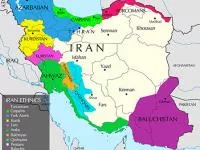
Outside the university, women’s rights activists, NGO organizers, Kurdish, Arab, and Baluchi feminists, migrant women, and countless others forged analytical frameworks grounded in lived struggle rather than state-sanctioned curricula. This long-standing work laid the groundwork for the profound shift that followed the Jina uprising.
Originating in Iranian Kurdistan, the Jina moment made legible a new feminist consciousness: intersectional, decolonial, and transnational in orientation. It drew from decades of organizing among Kurdish, Baluchi, Arab, and migrant women who had long confronted intersecting regimes of patriarchy, militarism, ethnic marginalization, and economic dispossession. Their struggles provincialized Tehran-centered feminism and revealed how gender is inseparable from ethnicity, class, violence, and coloniality.
This emergent feminist consciousness is grounded locally yet attentive to global circuits of violence and solidarity. It recognizes that the struggles in Rojhelat and Sistan–Baluchestan resonate with those in Palestine and Afghanistan, and that the demand for life and dignity is always transnational. It challenges gender studies to break from its state-shaped origins and rebuild itself around solidarities from below, around the knowledge that emerges from bodies, communities, and everyday survival.
The need to enact a sociology grounded in lived experience and committed to collective transformation
In this light, my dismissal was not an isolated event but a symptom of the broader struggle over who gets to produce knowledge and what forms of knowledge are allowed to exist. It is a reminder that reclaiming gender studies requires us to bring center stage precisely the forms of narrative, care, and grounded inquiry that have long been treated as peripheral.
From here, feminist praxis appears not as an alternative to gender studies but as its reorientation. It advances a regional ethics of solidarity that holds minority, Afghan, and Palestinian struggles together without producing hierarchies of suffering. In this landscape, gender studies emerges as a connective practice of listening, translation, and making marginalized lifeworlds visible: an epistemology that is situated yet transversal; rooted in context yet able to move across disciplinary, national, and identity boundaries. Its future depends not on institutional recognition but on its ability to produce and enact a sociology for people, grounded in lived experience and committed to collective transformation.
Shiva Alinaqian, independent researcher, Iran <sh_alinaghian@yahoo.com>