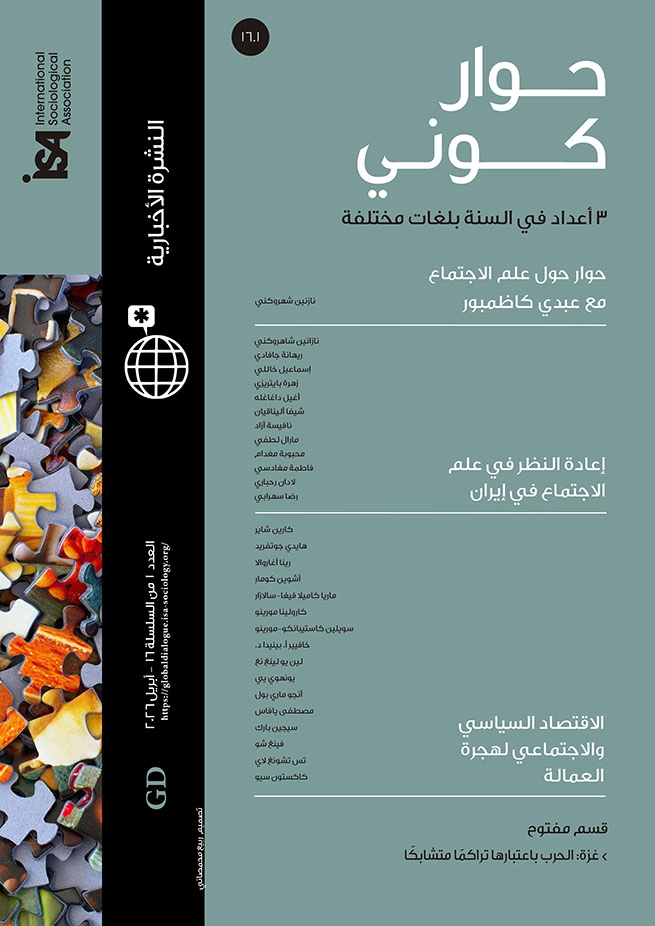
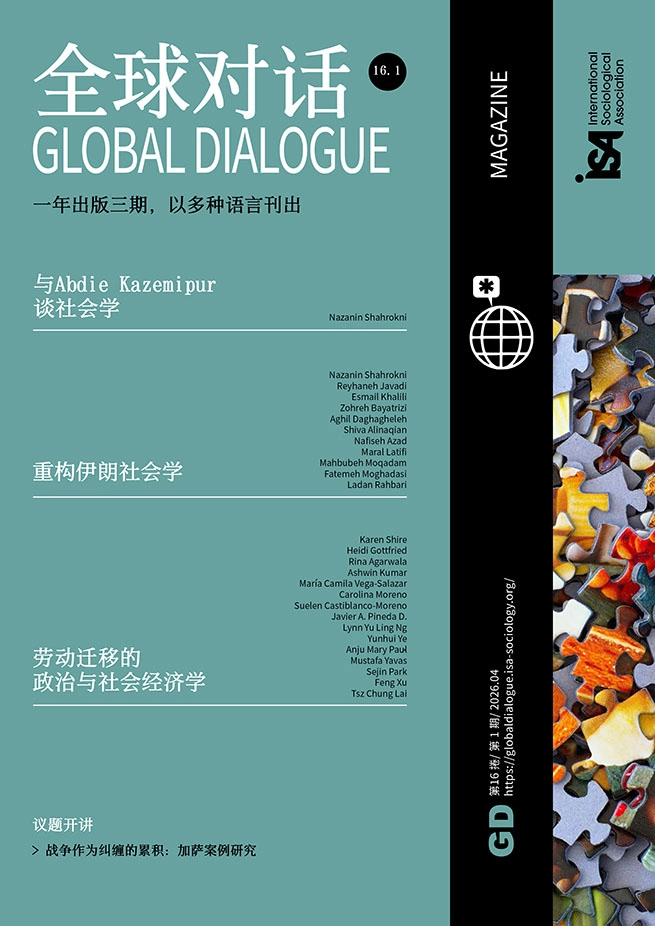
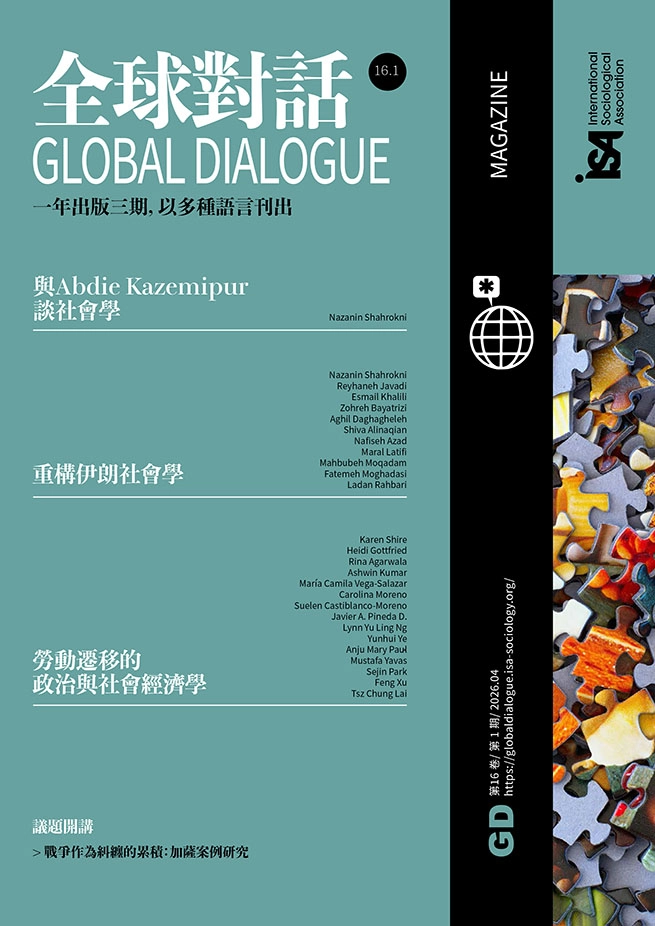
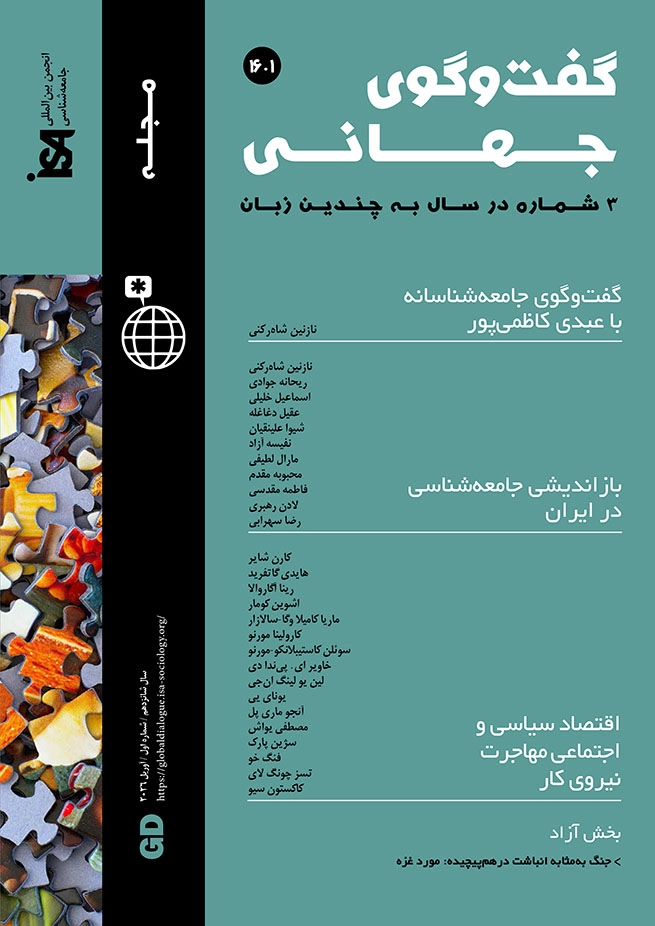

Between Repression and Relevance: Rethinking Sociology Through the Lens of Iran
March 05, 2026
This symposium on the sociology of Iran appears at a moment when knowledge production in the country is under extraordinary strain. Iranian sociology has long been animated by debates over its public role – whether it should serve as a critical voice, a diagnostic tool for social crises, or a mediator between state and society. Today, however, the terrain on which these debates unfold has narrowed dramatically. Political repression, the silencing of dissident academic voices across a fractured public sphere, economic precarity, global sanctions, and restrictive mobility and visa regimes have collectively thinned the institutional and intellectual infrastructures that sustain scholarly life. Universities operate under tightening political constraints, research funding is scarce, and international collaboration increasingly difficult. Yet Iranian sociology persists, sustained by scholars who continue to analyze, document, and engage profound transformations shaping their society.
As we prepared this symposium, the volatility of this landscape became impossible to ignore. Iran moved through a sequence of crises illustrating the precariousness of academic life and knowledge production. In June 2025, Israel launched a twelve-day war on Iran, striking military and civilian infrastructure across the country. Months later, the January 2026 uprisings erupted, only to be met with a brutal state crackdown that left thousands of civilians dead. The protests and the state’s violent response were described by the Iranian Sociological Association as neither unprecedented nor unpredictable. The Association warned that normalized violence threatens social solidarity and human dignity. In this context, sociology becomes more – not less – necessary: a means of documenting crises, interpreting their structural roots, and sustaining public conversation about possible futures.
Yet even these constricted circumstances have been further undermined. As this symposium goes to press, a new round of coordinated U.S.–Israeli military strikes has again killed civilians across the country indiscriminately. Among the victims are more than 100 schoolgirls under the age of 12 killed in a devastating attack on an elementary school in the small southern city of Minab. The bombardments have further devastated infrastructure, compounding an already fragile institutional landscape and placing at risk the intellectual foundations painstakingly built and sustained by generations of Iranian social scientists.
Taken together, these developments capture the terrain on which sociology in Iran must operate. Scholars confront pressures from multiple directions at once – domestic repression that constrains intellectual autonomy and public debate, and external military and economic coercion that further destabilizes the institutions on which scholarly life depends. This symposium thus reflects not only on Iranian society but also on the conditions under which sociology itself must persist and speak.
Workers and infrastructures under repeated attack both in and outside Iran
The fragility of these conditions is perhaps most visible in the precarious physical existence of the Iranian Sociological Association. Its official office at the University of Tehran remains vulnerable to state-regulated scrutiny and exposes the Association to recurring pressures on its autonomy. Its stalled efforts to secure an independent and permanent site further illustrate a broader contraction of sociological and public life. These institutional uncertainties unfold alongside recurring waves of arrests targeting scholars, translators, and researchers undermining not only individuals but also the infrastructures that sustain critical thought. Under these conditions, sociological work often carries considerable personal risk. These pressures have deep historical roots: sociology has long been treated as ideologically suspect, repeatedly subjected to Islamization, disciplinary “cleansing,” and persistent securitization.
These contradictions extend beyond Iran’s borders. Iranian American and other diasporic scholars confront growing surveillance and mobility constraints in both Iran and Western academic institutions, navigating overlapping security logics that limit travel and collaborative work. The suspicion that marks sociology inside Iran increasingly shadows it outside Iran.
Unexpected forms of resilience
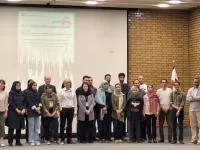
Yet these pressures coexist with meaningful shifts. The 2025 election of Dr. Shirin Ahmadnia as the first woman president of the Iranian Sociological Association triggered many reactions, signaling both the belated recognition of women’s sociological labor and the possibility of reconfiguring a historically male institutional space in a discipline now largely sustained by women students. That such an election occurred in the midst of institutional precarity is itself telling: even as structures weaken, new claims to visibility and authority emerge. In this tension, Iranian sociology has cultivated unexpected forms of resilience, as scholars and students carve out spaces for thought and debate across universities, private institutes, reading groups, and diaspora networks.
Aims of this collection and a heuristic aid
This collection pursues two aims. It foregrounds both the intellectual vitality of Iranian sociology and the obstacles that contour its practice, and places these debates within wider disciplinary efforts to rethink sociology through a global frame attuned to uneven geographies of power. As a heuristic guide, we introduce a distinction between sociology in Iran and sociology of Iran; not as a geographic binary, but as a way of marking the epistemic, methodological, and political fissures that contour the field.
Sociology in and sociology of: circulations across contexts
By sociology in Iran, we refer to the diverse professional, pedagogical, and research practices that take shape within Iran’s universities, associations, private institutes, and informal intellectual networks. These include not only the production of sociological knowledge but also its circulation through a vibrant translation industry, public lectures, workshops, and semi-independent teaching spaces that sustain sociological engagement beyond formal institutions. These practices unfold under conditions of censorship, surveillance, ideological vetting, economic austerity, and international institutional gatekeeping, including language, reputation, and geopolitical barriers: constraints that render critical inquiry risky and uneven, yet also generate inventive strategies for collaboration, pedagogy, and public debate.
By sociology of Iran, we refer to the body of scholarship that seeks to understand Iran – its social formations, histories, and political economies – whether produced inside or outside the country. Much of this work circulates within global academic frameworks and is shaped by expectations of “legibility” to dominant disciplinary audiences. These pressures can sideline the concepts, priorities, and epistemic vocabularies that emerge from within Iran, even as they facilitate broader international visibility and debate.
Crucially, these orientations are not fixed domains or opposing categories. Ideas, archives, and methodological sensibilities circulate across borders despite political and institutional barriers. Scholars move between these positions over the course of their careers, and their work is shaped by shifting combinations of access, constraint, and audience.
Under suspicion the world over and constrained by sanctions
Yet the asymmetries of visibility, resources, and institutional recognition remain significant. Researchers inside Iran contend with censorship, surveillance, and material precarity; those outside confront sanction regimes, visa restrictions, and the disciplining gaze of Western institutions. For many diasporic scholars, this means being rendered suspect in both locations – monitored in Iran and scrutinized in North America or Europe – in ways that materially affect what can be studied, written, and shared.
These fractures are further intensified by geopolitics. US sanctions have made it difficult, and at times impossible, for scholars based in Iran to participate in global academic networks, pay dues to professional associations, or attend conferences. Once a more robust hub of public debate, the Iranian Sociological Association now struggles to sustain even basic activities under economic strain and institutional pressure. These exclusions not only constrain Iranian sociology, they diminish global sociology as well, normalizing the absence of voices from sanctioned, surveilled, and structurally marginalized contexts.
Epistemic, methodological, and institutional strains
The contributions to this symposium approach these dilemmas from multiple angles. Some examine the institutional conditions under which sociology is practiced; others probe foundational epistemic questions; and an interview with Abdolmohammad Kazemipur situates Iranian debates within wider theoretical reflections on particularism and universality.
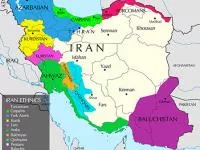
Essays by Aghil Daghagheleh and Shiva Alinaqian trace the epistemic silences around ethnicity and gender, revealing how a dominant normative center – shaped by intersecting gender, ethnic, and class hierarchies – has long structured Iranian sociology, positioning peripheral and feminist perspectives as marginal or suspect. These exclusions are not only intellectual but institutional. As Esmail Khalili shows, the Iranian Sociological Association embodies an “institutionalization of non-institutionalization”: a form of organizational life in which the aspiration to institutionalize sociology persists, even as the structures meant to sustain it are continually undermined. His analysis highlights the paradox that, while much of the field’s energy is directed toward building durable institutional forms, these very efforts unfold within settings that constrain substantive autonomy and reproduce the limits they seek to overcome. A similar tension appears in work on privatization: Reyhaneh Javadi and Zohreh Bayatrizi demonstrate how the privatization of sociology, initially imagined as a partial remedy to the absence of academic autonomy, has instead deepened neoliberal logics of commodification, transforming education into a credentialing market rather than a public good.
The methodological struggles discussed in the roundtable “Under Constraint: Sociological Research on Iran” extend this analysis into the everyday practice of research. From fieldwork limitations and opaque ethics procedures to the threat of criminalization, participants show how politically charged environments – whether in Iran or in the diasporic and institutional settings in which Iran is studied – shape not only what can be examined but also how data can be collected, archived, and disseminated.
Emerging transformative practices and innovative modes of engagement
Yet the symposium also highlights possibilities forged within and against constraint. Feminist scholars continue to produce incisive analyses of gender, religion, and state power despite marginalization within official institutions. Work on ethnicity pushes against nationalist orthodoxies, insisting that ethnic difference must be situated within the histories of state formation, sovereignty, and everyday resistance. The Iranian Sociological Association – despite its insecure premises and dependence on public universities or municipal goodwill – continues to provide platforms for conferences, publications, and public-facing events. Private and semi-private sociology classes generate hybrid pedagogical spaces that oscillate between resistance and neoliberal reproduction. Across these contexts, sociologists transform limitations into methodological and conceptual innovations.
Taken together, these contributions illuminate a terrain marked by complex, multi-scalar constraints alongside diverse and inventive modes of engagement. They show how the field is continually remade through the interplay of structural pressures and the resourceful practices scholars deploy to endure, adapt, and intervene.
Towards a sociology with Iran
This symposium does not aim to map Iranian sociology comprehensively, but rather to situate these pressures within a broader set of disciplinary questions. The precarities facing sociology in/of Iran resonate with wider patterns across the Global South, where sociologists contend with authoritarian governance, market pressures, and unequal access to global circuits of knowledge. By assembling these interventions, we seek not only to document these challenges but also to invite readers to consider the conceptual and methodological insights they offer for the discipline more broadly. In this sense, the story of Iranian sociology becomes a story about sociology itself: its limits, its possibilities, and its ongoing struggle to remain accountable to the societies from which it emerges.
What we propose, therefore, is a gesture toward a sociology with Iran: a mode of engagement grounded in collaboration, reciprocity, and reflexivity. This approach does not resolve the tensions between sociology in and sociology of Iran, but it insists on working through and across them. It recognizes Iranian sociology as central – not peripheral – to rethinking the discipline’s global trajectories and to challenging the exclusions that shape the production and circulation of sociological knowledge.
Such a stance resists treating Iranian sociology as a case or an object of external scrutiny. Instead, it affirms that the intellectual labor, institutional struggles, and methodological innovations of Iranian sociologists constitute vital contributions to sociology writ large. At a moment when Iranian voices are systematically excluded from international forums, the imperative to build a sociology with Iran is also an imperative of disciplinary justice.
Nazanin Shahrokni, Simon Fraser University, Canada <nazanin_shahrokni@sfu.ca>
Reyhaneh Javadi, University of Alberta, Canada <javadi1@ualberta.ca>