
‘Mobile Developmentalism’ of Care Labor Migration in China and Singapore
March 20, 2026
The COVID-19 pandemic brought renewed attention to care work and our global dependence on migrant domestic workers. Yet despite shared struggles, these workers’ experiences have rarely been analyzed across different national contexts. The vibrant scholarship on this front in East Asia, Europe, and indeed within large countries like China and India has gained traction, but remains relatively marginal to mainstream research contexts. We participate in this significant conversation by weaving together the case of domestic care workers (DCWs) in China and foreign domestic workers (FDWs) in Singapore to reveal how similar economic development strategies create parallel forms of exploitation.
Outdated models rank rural/traditional as more “backward” and urban/modern as “superior”
In our article “Same but Different: Care Labor Migration in China and Singapore” to be published in a forthcoming special issue on “Spatialities of Domesticity” in Work Organisation, Labour and Globalisation, we draw on feminist political economy scholarship and online ethnographic research to compare domestic worker experiences across national boundaries, revealing shared patterns of exploitation rooted in development ideologies. We illustrate circumstances of what we call “mobile developmentalism”: linear and stage-based development ideologies that, following popular modernization theory, construct superior versus inferior statuses of rural/traditional and urban/modern people, respectively.
Migrant mobilities are shaped by such social hierarchies. In China, rural domestic workers are discriminated against based on lower suzhi (human quality). In Singapore, FDWs are understood as coming from “less developed” parts of Asia. Both groups of migrant women are subject to the “mobile developmentalism” of colonial civilizational ranking where some people are seen as inherently more “modern” or “developed.”
This ranking system is not coincidental. It stems from post-war modernization theory that celebrates linear progress from “backward” rural/traditional societies to “advanced” urban/modern ones. Whether workers move across international borders (Singapore) or internal rural-urban divides (China), they face a similar devaluation of their humanity and labor.
Understanding the care crisis
States use development strategies to justify the denigration of women and the care work they do. National goals of economic modernization and “uplifting” the country are a major, but not the only, part of the picture. There is rich feminist political economy scholarship on how care work is systematically denigrated. Whether performed by rural Chinese or Asian migrants, this labor is rendered invisible and exploitable through gendered ideologies that frame women of color as especially naturally suited to serving others. This state of affairs reflects broader global failures to value care work. Care is seen as women’s “natural duty”: an infinite, free-flowing resource motivated by “love” rather than deserving of fair compensation.
The notion of suzhi (human quality) and “less developed” Asia
China’s hukou (household registration) system, established in the 1950s, creates institutional rural–urban segregation. Rural migrants can work in cities but cannot access urban benefits like healthcare, education for their children, or social security. The suzhi discourse reinforces this by portraying rural people as “low quality”: lacking civility and hindering China’s modernization.
One domestic care worker courageously challenged this when her employer denied her New Year’s Day off, asking: “As a Baomu (derogatory term for domestic worker), what right do you have to ask for a government holiday?” She responded: “Are Baomu not Chinese citizens? If so, they are entitled to statutory holidays.” Her defiance cost her the job.
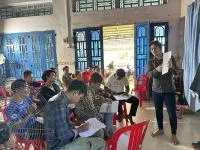
In Singapore, FDWs face racialized discrimination as women from “less developed” Asian countries. Recruitment websites display their photos, personal details, and “skills” like products for comparison shopping. The state’s mandatory live-in policy and employer sponsorship system (similar to the kafala system) creates dependency relationships where workers cannot easily change employers, even when facing abuse.
Chinese workers are co-ethnic citizens moving within their own country. Their counterparts in Singapore are foreign nationals crossing international borders. Both groups navigate similar challenges.
Legal Vulnerability: In China, over 90% of domestic workers lack formal employment contracts because only companies, not households, are recognized as employers. Similarly, while FDWs in Singapore have contracts, they are classified as temporary “guest workers” in the lowest visa category, renewable only every two years.
Live-in Exploitation: Both groups typically live with employing families, creating an expectation of 24/7 availability. One FDW in Singapore shared: “I wake up at 4 am to cook breakfast […] my rest time starts from 11 pm to 12 midnight, depending on what time they arrive home from work.” A Chinese domestic care worker’s poem reads: “By the time my head touches the pillow, it’s already eleven. Exhausted, drenched in sweat, I lie in bed, thinking of home.”
Dehumanizing Treatment: Both groups face condescending attitudes rooted in development ideology. Chinese employers criticize domestic care workers’ “non-standard Mandarin” and force them to practice speaking “properly”. Singaporean employers view FDWs as needing “discipline” to make them suitable for urban life, criticizing their hygiene, familiarity with modern appliances, and “laid-back” rural lifestyles.
Exploitation within private spaces and development ideologies treat migrant care workers as less worthy of dignity and protection
Our comparative lens pays attention to the national in international migration. Both internal migration (China) and international migration (Singapore) reveal development ideologies across different scales and contexts. Both create what can be called “spatialities of domesticity”: private spaces where exploitation thrives beyond public scrutiny and labor regulation. Global development strategies create local hierarchies that justify treating certain populations as disposable labor. Whether justified through rural–urban or international development gaps, the result is similar: women’s care work becomes a commodity extracted to support other families’ social reproduction.
Understanding mobile developmentalism helps us see connections between seemingly different situations. Chinese DCWs fighting for basic labor rights and Singaporean FDWs organizing for fair treatment face similar challenges rooted in development ideologies that position them as inherently less worthy of dignity and protection.
Ultimately, a collective recognition of these parallels opens up possibilities for transnational and relational solidarity and learning across contexts. Both groups of women demonstrate remarkable resilience, using online spaces to share experiences, offer mutual support, and document injustices. Their voices challenge the mainstream denigration of care work and labor exploitation, and demand recognition of their full humanity.
Lynn Yu Ling Ng, York University, Canada <lynnngyl@yorku.ca>
Yunhui Ye, University of Victoria, Canada <yunhuiye@uvic.ca>