GD 10.2 - August 2020
Global Dialogue is available in multiple languages!
Select the language to download the issue.
Editors:
Brigitte Aulenbacher, Klaus Dörre.
Assistant Editors:
Johanna Grubner, Christine Schickert.
Associate Editor:
Aparna Sundar.
Managing Editors:
Lola Busuttil, August Bagà.
Consultants:
Michael Burawoy.
Media Consultant:
Juan Lejárraga.
Consulting Editors:
Sari Hanafi, Geoffrey Pleyers, Filomin Gutierrez, Eloísa Martín, Sawako Shirahase, Izabela Barlinska, Tova Benski, Chih-Jou Jay Chen, Jan Fritz, Koichi Hasegawa, Hiroshi Ishida, Grace Khunou, Allison Loconto, Susan McDaniel, Elina Oinas, Laura Oso Casas, Bandana Purkayastha, Rhoda Reddock, Mounir Saidani, Ayse Saktanber, Celi Scalon, Nazanin Shahrokni.
REGIONAL EDITORS
Arab World: (Tunisia) Mounir Saidani, Fatima Radhouani, Habib Haj Salem; (Algeria) Souraya Mouloudji Garroudji; (Morocco) Abdelhadi Al Halhouli, Saida Zine; (Lebanon) Sari Hanafi.
Argentina: Magdalena Lemus, Pilar Pi Puig, Martín Urtasun.
Bangladesh: Habibul Haque Khondker, Hasan Mahmud, US Rokeya Akhter, Juwel Rana, Toufica Sultana, Asif Bin Ali, Khairun Nahar, Kazi Fadia Esha, Muhaimin Chowdhury, Helal Uddin, Md. Eunus Ali, Mostafizur Rahman, Jhilik Saha, Maria Sardar, Tahmid Ul Islam.
Brazil: Gustavo Taniguti, Angelo Martins Junior, Andreza Galli, Dmitri Cerboncini Fernandes, Gustavo Dias, José Guirado Neto, Jéssica Mazzini Mendes.
France/Spain: Lola Busuttil.
India: Rashmi Jain, Nidhi Bansal, Pragya Sharma, Manish Yadav.
Indonesia: Kamanto Sunarto, Hari Nugroho, Lucia Ratih Kusumadewi, Fina Itriyati, Indera Ratna Irawati Pattinasarany, Benedictus Hari Juliawan, Mohamad Shohibuddin, Dominggus Elcid Li, Antonius Ario Seto Hardjana, Diana Teresa Pakasi, Nurul Aini, Geger Riyanto, Aditya Pradana Setiadi.
Iran: Reyhaneh Javadi, Niayesh Dolati, Abbas Shahrabi, Sayyed Muhamad Mutallebi, Faezeh Khajehzade.
Japan: Satomi Yamamoto.
Kazakhstan: Aigul Zabirova, Bayan Smagambet, Adil Rodionov, Almash Tlespayeva, Kuanysh Tel, Almagul Mussina, Aknur Imankul.
Poland: Justyna Kościńska, Magdalena Kamela, Aleksandra Lubińska, Adam Müller, Jonathan Scovil, Aleksandra Biernacka, Jakub Barszczewski, Agnieszka Szypulska, Iga Łazińska, Aleksandra Senn, Sara Herczyńska, Zofia Penza-Gabler, Iwona Bojadżijewa, Weronika Peek.
Romania: Raluca Popescu, Raisa-Gabriela Zamfirescu, Diana Alexandra Dumitrescu, Iulian Gabor, Bianca Mihăilă, Alexandra Mosor, Mioara Paraschiv, Maria Stoicescu.
Russia: Elena Zdravomyslova, Anastasia Daur, Valentina Isaeva.
Taiwan: Wan-Ju Lee,Tao-Yung Lu, Po-Shung Hong, Yu-Min Huang, Bun-Ki Lin, Yu-Chia Chen.
Turkey: Gül Çorbacıoğlu, Irmak Evren.
GD 10.2 - August 2020
Editorial
The COVID-19 pandemic and crisis dominates the discussions and developments in many countries around the world. The so-called hotspots or the gap between countries of the Global North and South show how social inequalities matter. It is not only healthcare that will be a matter of concern in the next years but also the succeeding economic, social and political developments. In some countries the economic crisis amounts to a deep ongoing social crisis, and/or democracy is put at risk by restrictive politics. With this issue Global Dialogue starts a series on the pandemic and its meaning for the society and for sociology and invites authors from different countries and regions to contribute their insights. To start this series, three authors share their reflections on COVID-19 and its effects.
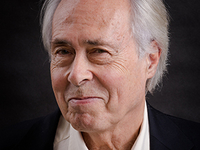
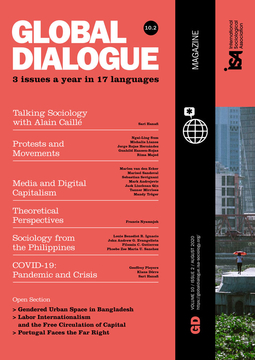
In our section ‘Talking Sociology’ Sari Hanafi conducts an interview with Alain Caillé, co-founder of the convivialist movement and manifesto. Caillé criticizes the neoliberal standpoint, describes the roots of “Convivialism,” and shows why and how it functions as an “empty signifier” bringing together people who hope and strive to create a “post-neoliberal world.”
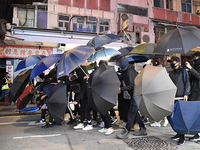
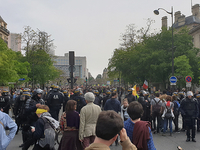
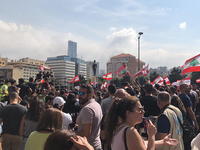
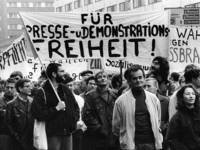
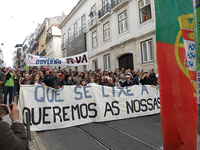
In the last years we have been witnessing a lot of protests against anti-democratic tendencies, neoliberal developments, and the effects of market-driven economic and social inequalities. New social movements and protest forms have emerged and challenged the politics of the establishment in many regions of the world. Our first symposium – with contributions by Ngai-Ling Sum, Michalis Lianos, Jorge Rojas Hernández, Gunhild Hansen-Rojas, and Rima Majed – sheds light on the situation in Hong Kong, France, Chile, Lebanon, and Iraq.
The second symposium highlights how media and communication together with the drive for profit shape our society. The articles put together by Marlen van den Ecker and Sebastian Sevignani cover different aspects and effects of the digitalization and marketization of communication – from social media users acting as unpaid laborers and the role of data in capitalist ownership and accumulation to the new digital workers in China and the restructuring of media systems – and show how these processes go hand in hand with the transformation of capitalism in different parts of the world.
The section on ‘Theoretical Perspectives’ also takes up the subject of information and communication technologies. Francis Nyamnjoh reflects on the West and Central African idea of human beings embedded in an ontology of “the incompleteness and compositeness of being human” and shows how this is affected by the use of technologies.
For our section focused on the sociology of a particular country or region Filomin Gutierrez has taken the responsibility to invite colleagues from the Philippines to present important sociological issues and findings. The result is an impressive collection of pieces from urban studies, public sociology and more.
The articles included in our Open Section address important sociological topics such as the gendering of open space, labor internationalism, finance capitalism and the reaction to right-wing populism.
Brigitte Aulenbacher and Klaus Dörre, editors of Global Dialogue.
Global Dialogue can be found in multiple languages.
Submissions should be sent to globaldialogue@isa-sociology.org.