GD 11.2 - August 2021
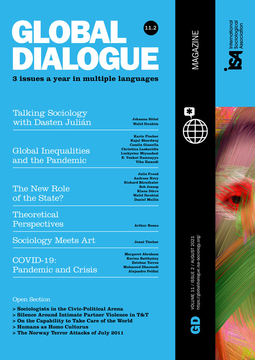
Global Dialogue is available in multiple languages!
Select the language to download the issue.
Editors:
Brigitte Aulenbacher, Klaus Dörre.
Assistant Editors:
Johanna Grubner, Walid Ibrahim.
Associate Editor:
Aparna Sundar.
Managing Editors:
Lola Busuttil, August Bagà.
Consultants:
Michael Burawoy.
Media Consultant:
Juan Lejárraga.
Consulting Editors:
Sari Hanafi, Geoffrey Pleyers, Filomin Gutierrez, Eloísa Martín, Sawako Shirahase, Izabela Barlinska, Tova Benski, Chih-Jou Jay Chen, Jan Fritz, Koichi Hasegawa, Hiroshi Ishida, Grace Khunou, Allison Loconto, Susan McDaniel, Elina Oinas, Laura Oso Casas, Bandana Purkayastha, Rhoda Reddock, Mounir Saidani, Ayse Saktanber, Celi Scalon, Nazanin Shahrokni.
REGIONAL EDITORS
Arab World: (Tunisia) Mounir Saidani, Fatima Radhouani, Habib Haj Salem; (Algeria) Souraya Mouloudji Garroudji; (Morocco) Abdelhadi Al Halhouli, Saida Zine; (Lebanon) Sari Hanafi.
Argentina: Magdalena Lemus, Juan Parcio, Martín Urtasun.
Bangladesh: Habibul Khondker, Khairul Chowdhury, Abdur Rashid, Ashis Kumer Banik, A.B.M. Najmus Sakib, Bijoy Krishna Banik, Eashrat Jahan Eyemoon, Ekramul Kabir Rana, Helal Uddin, Juwel Rana, M. Omar Faruque, Masudur Rahman, Md. Shahin Aktar, Mohammad Jasim Uddin, Mohammed Jahirul Islam, Ruma Parvin, Sabina Sharmin, Saleh Al Mamun, Sarker Sohel Rana, Sebak Kumar Saha, Shahidul Islam, Shamsul Arefin, Sharmin Akter Shapla, Syka Parvin, Yasmin Sultana.
Brazil: Gustavo Taniguti, Angelo Martins Junior, Andreza Galli, Dmitri Cerboncini Fernandes, Gustavo Dias, José Guirado Neto, Jéssica Mazzini Mendes.
France/Spain: Lola Busuttil.
India: Rashmi Jain, Nidhi Bansal, Manish Yadav, Sandeep Meel.
Indonesia: Kamanto Sunarto, Hari Nugroho, Lucia Ratih Kusumadewi, Fina Itriyati, Indera Ratna Irawati Pattinasarany, Benedictus Hari Juliawan, Mohamad Shohibuddin, Dominggus Elcid Li, Antonius Ario Seto Hardjana, Diana Teresa Pakasi, Nurul Aini, Geger Riyanto, Aditya Pradana Setiadi.
Iran: Reyhaneh Javadi, Niayesh Dolati, Abbas Shahrabi, Sayyed Muhamad Mutallebi.
Kazakhstan: Aigul Zabirova, Bayan Smagambet, Adil Rodionov, Almash Tlespayeva, Kuanysh Tel, Almagul Mussina, Aknur Imankul, Madiyar Aldiyarov.
Poland: Justyna Kościńska, Jonathan Scovil, Sara Herczyńska, Weronika Peek, Aleksandra Wagner, Aleksandra Biernacka, Jakub Barszczewski, Adam Müller, Zofia Penza- Gabler, Iwona Bojadżijewa.
Romania: Raluca Popescu, Raisa-Gabriela Zamfirescu, Iulian Gabor, Monica Georgescu, Ioana Ianuș, Bianca Mihăilă.
Russia: Elena Zdravomyslova, Anastasia Daur.
Taiwan: Wan-Ju Lee, Tao-Yung Lu, Tsung-Jen Hung, Syuan-Li Renn, Yu-Chia Chen, Yu-Wen Liao, Po-Shung Hong.
Turkey: Gül Çorbacıoğlu, Irmak Evren.
GD 11.2 - August 2021
Editorial
In this issue of Global Dialogue the section ‘Talking Sociology’ takes up the current developments in Chile. In this interview conducted by Johanna Sittel and Walid Ibrahim, Dasten Julián, a most renowned researcher working in the intersecting fields of sociology and history reflects on political developments, social protests and precarious work in his country, and on the relation between social science and society.
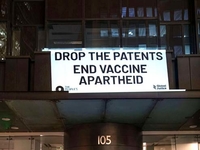
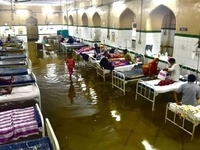
For the past one and a half years the COVID-19 pandemic has led to fundamental changes in everyday life as well as to new economic, social and political crises. Since the beginning of its outbreak Global Dialogue has strived to give insight into the developments around the globe. For this issue, Karin Fischer has organized a symposium systemically reflecting on the pandemic and global inequalities with contributions from India, Peru, the UK and South Africa. Although the pandemic affects the world population, “we are not all sitting in the same boat.” The development, marketization, and (lacking) availability of the vaccines, and the effects of the pandemic in terms of health or education show and increase global inequalities between poor and rich countries, the Global South and Global North, vulnerable groups already suffering from ecological or economic crises and those groups who can afford to protect themselves.
Our second symposium discusses the remarkable change in the relation between the economy and the state. Scholars promoting the concept of the Foundational Economy criticize the economic liberalization of the last decades, analyze the limits of the dominant idea of growth, and plead for new modes of provisioning in the fields of healthcare, education, food, public transfer, etc. combined with infrastructures shaped and controlled by democratic institutions. Reflecting on the changing role of the state in the face of the pandemic, authors discuss about how far this may affect the relation of economy and politics in the long run, the direction in terms of authoritarian or democratic tendencies this may lead to, and to what extent sociology is challenged by the new state interventionism.
In the theoretical section Arthur Bueno reconstructs the neoliberal era of the last decades that caused economic and social crises as well as crises of subjectivity. By focussing on depression he discusses the turn from self-entrepreneurship to exhaustion, and from self-realization to alienation, as well as the influence of protest movements and authoritarian politics, and future perspectives.
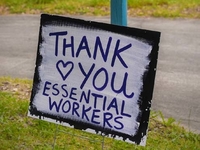
The artist Jenni Tischer contributes to the public debate on essential work in the pandemic by explaining two of her collages aiming to make invisible work more visible.
The section on COVID-19 outlines some challenges for sociology, with Margaret Abraham analyzing how the pandemic goes along with increasing domestic violence, Karina Batthyány and Esteban Torres taking up the topic of social inequalities, and Mahmoud Dhaouadi discussing the growing influence of hate speech, while Alejandro Pelfini focusses on the society’s learning processes.
Last but not least, the ‘Open Section’ offers theoretical reflections, in particular concerning competing conceptions of humanity, as well as the discussion of recent events and contemporary developments in different countries regarding violence on the one hand and care on the other.
Brigitte Aulenbacher and Klaus Dörre, editors of Global Dialogue.
Global Dialogue can be found in multiple languages.
Submissions should be sent to globaldialogue@isa-sociology.org.