T.K. Oommen: Social Movements and Sociology beyond Westernisation
March 23, 2026
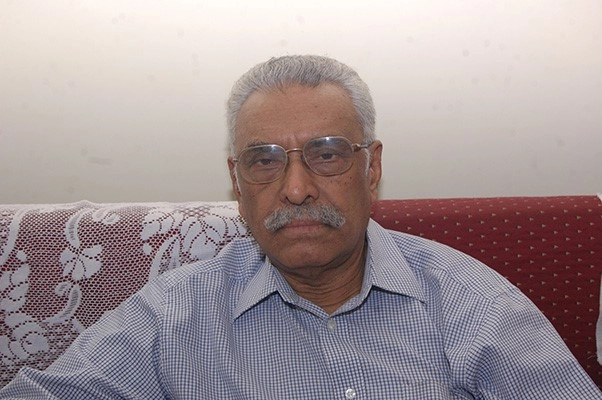
Tharailath Koshy Oommen, who passed away on February 26th, was one of the most influential figures in Indian sociology and a pioneering voice in the effort to build a genuinely international sociology. Over more than six decades, T.K. Oommen contributed to rethinking the relationship between social movements, citizenship and plural societies, while also playing a decisive institutional role in opening up the International Sociological Association (ISA) more fully to the intellectual contributions of the Global South.
A leading figure within Indian sociology over the past 60 years, Oommen made major contributions to international sociology as well as to Indian sociology. He is set to remain one of the most influential presidents of the ISA. After serving as Secretary-General of the 1986 World Congress of Sociology in New Delhi, he was elected ISA President four years later, becoming the second ISA President from the Global South, and the first from India or Asia. His mandate, from 1990 to 1994, took place at a pivotal historical moment: the end of the Cold War opened the way to a new global era that also called for a renewed vision of international sociology. Oommen consistently argued that the internationalisation of sociology should not mean the diffusion of Western sociology to the rest of the world, but the construction of a genuinely global discipline rooted in dialogue between different intellectual traditions.
T.K. Oommen also contributed to consolidating and expanding the Indian Sociological Society, in which he occupied several positions, from Treasurer (1975–1978) to President (1998–1999). He was born and raised in Kerala, a southern Indian state known for its progressive social policies. He obtained his BA and PhD in sociology from Pune University and then moved to Delhi to teach, first at Delhi University and later, for most of his career, at Jawaharlal Nehru University, where he was eventually named Emeritus Professor. In 2008, he was awarded the Padma Bhushan by the President of India for his contributions to education and the social sciences.
Social movements, ambivalent citizenship and dignity
T.K. Oommen dedicated his doctoral dissertation to the Bhoodan–Gramdan movement: a movement of landless peasants that advocated and implemented land reform in the 1950s. Breaking with classical Indian and Western sociological approaches that interpreted social movements primarily through the lens of class conflict, he analysed them as struggles over citizenship, dignity and recognition in deeply plural and unequal societies.
In fact, one of Oommen’s key contributions was precisely to conceptualise social movements as struggles over citizenship in plural societies. He showed how social movements often emerge when formal citizenship is not translated into substantive citizenship. In societies marked by caste hierarchies, ethnic divisions or colonial legacies, individuals may possess legal citizenship yet remain socially excluded or stigmatised. In such contexts, social movements emerge as collective efforts to claim dignity, recognition and full participation in the political community.
In this sense, Oommen placed dignity at the centre of the analysis of social movements long before it became a central theme in the study of contemporary protests. Many of the major protest waves of the 2010s – from the Arab uprisings and the “revolution of dignity” in Tunisia to movements against inequality, discrimination and authoritarianism – have similarly articulated demands for dignity alongside claims for rights. While Oommen’s empirical work was deeply rooted in the complex and plural realities of India, its analytical reach extends far beyond his native country.
His work emphasised how struggles over citizenship and dignity are closely intertwined with broader concerns about equity and security in rapidly transforming societies. He highlighted how social movements often emerge at the intersection of distributive justice, development trajectories, and collective claims over resources and livelihoods. In the Indian context, this included not only peasant and labour movements demanding greater equity, but also mobilisations led by women, youth and other marginalised groups. Oommen also drew attention to the growing importance of ecological and environmental movements, showing how questions of development strategies, resource distribution and environmental security were increasingly shaping contemporary collective action.
Oommen’s work on social movements also anticipated and partly transcended some of the dominant paradigms that structured the field internationally. While European scholarship often emphasised cultural identities and collective meanings, and North American approaches tended to privilege rationalist and process-oriented explanations of mobilisation, research on movements in many parts of the Global South was frequently framed through structuralist or anti-colonial perspectives. Oommen’s work offered a distinctive analytical path that bridged these perspectives. By focusing on citizenship, dignity and recognition in plural societies, he connected structural inequalities, cultural identities and political struggles, thereby proposing an agenda for social movement studies that was both theoretically innovative and deeply grounded in the historical experience of postcolonial societies.
The internationalisation of sociology beyond Westernisation
Becoming ISA President at a crucial moment, just as a new era of globalisation opened after the fall of the Berlin Wall and the collapse of the Soviet Union, T.K. Oommen contributed to shaping the concept and practices of global sociology that lie at the core of the ISA today. At a time when debates on globalisation and internationalisation were gaining prominence in sociology, he insisted that the internationalisation of the discipline could not simply mean the global diffusion of Western concepts and theories. Rather, it required confronting the colonial legacies embedded in sociological knowledge and recognising the plurality of historical experiences and intellectual traditions shaping societies across the world.
Oommen identified three major problems in the dominant Western-centric vision of international sociology: the denial of colonialism, the national bias of the discipline, and an internationalisation that often amounted to the Westernisation of sociology.
Building on the work of one of the founders of Indian sociology, DP Mukerji, Oommen pointed to the invisibilisation of colonialism as the “great denial that thwarted the natural development of sociology as a discipline in the colonies” and limited the relevance of the discipline in postcolonial and diverse societies. This denial also prevented sociology from becoming truly global.
Following the same line of argument, Oommen strongly challenged the “irrational division” between sociology and social or cultural anthropology. Overcoming this division was not merely a matter of disciplinary boundaries, but also of addressing one of the core biases in sociology and in dominant visions of development. In an article published in Global Dialogue ten years ago, he claimed: “To insist that sociology is an offspring of modernity subjects non-modern societies to cognitive blackout, and ignores multiple modernities.” Development, he argued, “does not occur through the displacement of the old by the new as implied in the tradition–modernity paradigm, but through a process of reconciliation and accretion”. By questioning this disciplinary divide, Oommen sought to expand the scope of sociology and to challenge Eurocentric assumptions embedded in the discipline.
Oommen also challenged what would later be conceptualised as methodological nationalism, although the concept itself was not widely diffused at the time and is not explicitly used in his writings. As he stated in Global Dialogue: “Linking sociology with the nation-state goes against the very grain of the discipline. Sociology analyzes social structures and cultural patterns in all varieties of societies […] If sociology has a disciplinary interest in diversity, the nation-state relentlessly pursues the goal of homogenization. Paradoxically, the souls of sociology and the nation-state pull in opposite directions, but they are chained together in one body, that of the body politic, which impedes sociology’s internationalization.”
Among his most significant contributions was his unwavering warning that the internationalisation of sociology too often becomes synonymous with Westernisation. As he wrote, “what passes for internationalization now is largely the routine application of Western knowledge to apprehend non-Western reality”. For Oommen, an authentic internationalisation of sociology requires a different approach. “International sociology entails neither universalization nor indigenization but contextualization, avoiding both universalism’s hegemonization and indigenization’s parochialization.” Since the early 1980s, Oommen had already drawn attention to the global imbalance in the production of social sciences and contributed to early debates on academic dependency and the unequal global division of intellectual labour in the discipline.
Throughout his career, T.K. Oommen was a tireless promoter of intellectual contributions of Indian sociology and of sociologies from the Global South more broadly. As President of the ISA (1990–1994), he encouraged research on social movements, citizenship and democracy in Asia, Africa and Latin America, while promoting comparative dialogues across these regions. The ISA, and global sociology more broadly, would not be what they are today without him. His intellectual and institutional leadership helped shape the trajectory of the ISA and contributed to opening sociology to voices and perspectives across the Global South.
Global sociology: challenges and future directions
As we prepare for the 2027 World Congress of Sociology in Gwangju, South Korea, Oommen’s reflections remain strikingly relevant. As he noted, considering the size of the Asian population, the presence of Asian scholars in the ISA has long been far from satisfactory. Addressing this challenge requires more than increasing participation from Asian countries in ISA events and research committees. It also requires a deeper engagement with Asian sociologies themselves – their theoretical perspectives, historical experiences and interpretations of global transformations.
At a time when Western hegemony is increasingly questioned and new intellectual centres are emerging, engaging more seriously with the sociologies of Asia and the Global South becomes essential for the future of the discipline. If the period in which Oommen developed much of his work corresponded to a moment of decentring sociology – when scholars from the Global South increasingly challenged the epistemic dominance of Euro-American paradigms and called for a more plural and dialogical discipline – today we also witness countervailing tendencies of re-centring sociology. These include the persistence of structural inequalities in global knowledge production, the concentration of academic publishing and evaluation systems in a limited number of Western institutions, and the continued dominance of certain theoretical canons. Yet these dynamics coexist with the emergence of increasingly robust theoretical contributions, empirical research, and interpretations of global transformations produced across Asia and other regions of the Global South. Much of this work, however, remains insufficiently recognised or disseminated within the mainstream circuits of global sociology.
Re-centring sociology, however, should not imply replacing one intellectual centre with another, nor creating new hierarchies and peripheralities within the global production of knowledge. Rather, it should contribute to deepening dialogues among diverse sociological traditions and experiences, expanding the plurality of theoretical perspectives, and fostering more horizontal forms of intellectual exchange. In this sense, Oommen’s call for an international sociology based on contextualisation, dialogue, and epistemic plurality remains not only relevant but urgent.
In his last contribution to an ISA journal, T.K. Oommen reminded us: “Being a Euro-American transplant in Asia, sociological concepts and theories have not been able to capture Asian social reality fully […] For equity in participation in the ISA and the rapid internationalization of sociology, the tension between the ‘universalism’ of Western sociological concepts and theories and the ‘particularism’ of Asian social reality needs to be addressed […] The plea here is not to ‘provincialize’ the West or North […] but to recognize the peculiarities of other ‘provinces’ in the Republic of Knowledge Production so that authentic internationalization is achieved.” Promoting and implementing a global sociology that T.K. Oommen so consistently advocated will be our common aim at the 2027 World Congress of Sociology in Gwangju.
Geoffrey Pleyers, FNRS and Université catholique de Louvain, Belgium, and ISA President (2023-27) <geoffrey.pleyers@uclouvain.be>
Breno Bringel, Rio de Janeiro State University, Brazil, and Universidad Complutense de Madrid, Spain <brenobringel@iesp.uerj.br>