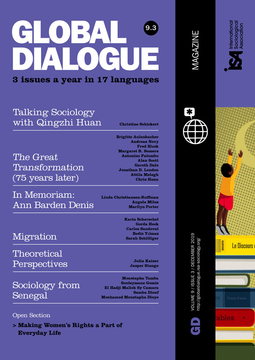
GD 9.3 - December 2019
Global Dialogue is available in multiple languages!
Select the language to download the issue.
Editors:
Brigitte Aulenbacher, Klaus Dörre.
Assistant Editors:
Johanna Grubner, Christine Schickert.
Associate Editor:
Aparna Sundar.
Managing Editors:
Lola Busuttil, August Bagà.
Consultants:
Michael Burawoy.
Media Consultant:
Juan Lejárraga.
Consulting Editors:
Sari Hanafi , Geoffrey Pleyers, Filomin Gutierrez, Eloísa Martín, Sawako Shirahase, Izabela Barlinska, Tova Benski, Chih-Jou Jay Chen, Jan Fritz, Koichi Hasegawa, Hiroshi Ishida, Grace Khunou, Allison Loconto, Susan McDaniel, Elina Oinas, Laura Oso Casas, Bandana Purkayastha, Rhoda Reddock, Mounir Saidani, Ayse Saktanber, Celi Scalon, Nazanin Shahrokni.
REGIONAL EDITORS
Arab World: Sari Hanafi , Mounir Saidani, Fatima Radhouani, Habib Haj Salem, Souraya Mouloudji Garroudji, Abdelhadi Al Halhouli, Saida Zine.
Argentina: Alejandra Otamendi, Juan Ignacio Piovani, Martín Di Marco, Pilar Pi Puig, Martín Urtasun.
Bangladesh: Habibul Haque Khondker, Hasan Mahmud, Juwel Rana, US Rokeya Akhter, Toufi ca Sultana, Asif Bin Ali, Khairun Nahar, Kazi Fadia Esha, Helal Uddin, Muhaimin Chowdhury, Md. Eunus Ali.
Brazil: Gustavo Taniguti, Angelo Martins Junior, Lucas Amaral Oliveira, Andreza Galli, Dmitri Cerboncini Fernandes.
France/Spain: Lola Busuttil.
India: Rashmi Jain, Nidhi Bansal, Pragya Sharma, Manish Yadav, Sandeep Meel.
Indonesia: Kamanto Sunarto, Hari Nugroho, Lucia Ratih Kusumadewi, Fina Itriyati, Indera Ratna Irawati Pattinasarany, Benedictus Hari Juliawan, Mohamad Shohibuddin, Dominggus Elcid Li, Antonius Ario Seto Hardjana, Diana Teresa Pakasi, Nurul Aini, Geger Riyanto, Aditya Pradana Setiadi.
Iran: Reyhaneh Javadi, Niayesh Dolati, Abbas Shahrabi, Sayyed Muhamad Mutallebi, Ehsan Pournejati.
Japan: Satomi Yamamoto, Sara Maehara, Takeshi Kunitake, Riho Tanaka, Ekaterina Steposhyna, Yusuke Yotsugi.
Kazakhstan: Aigul Zabirova, Bayan Smagambet, Adil Rodionov, Almash Tlespayeva, Kuanysh Tel, Almagul Mussina, Aknur Imankul.
Poland: Jakub Barszczewski, Aleksandra Biernacka, Iwona Bojadżijewa, Katarzyna Dębska, Monika Helak, Sara Herczyńska, Kinga Jakieła, Justyna Kościńska, Adam Müller, Weronika Peek, Zofi a Penza-Gabler, Jonathan Scovil, Marcjanna Szczepaniak, Agnieszka Szypulska, Aleksandra Wagner.
Romania: Cosima Rughiniș, Raisa-Gabriela Zamfi rescu, Luciana Anăstăsoaie, Cristian Chira, Alexandra-Ioana Dragomir, Diana Alexandra Dumitrescu, Radu Mihai Dumitrescu, Iulian Gabor, Dan Gîtman, Iulia Jugănaru, Ioana Mălureanu, Bianca Mihăilă, Rareş-Mihai Muşat, Oana-Elena Negrea, Mioara Paraschiv, Alina Cristina Păun, Codruţ Pînzaru, Susana Maria Popa, Adriana Sohodoleanu, Gabriela Stoian, Maria Stoicescu, Maria-Cristina Titea, Carmen Eugenia Voinea.
Russia: Elena Zdravomyslova, Anastasia Daur, Valentina Isaeva.
Taiwan: Jing-Mao Ho.
Turkey: Gül Çorbacıoğlu, Irmak Evren.
GD 9.3 - December 2019
Editorial
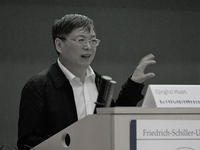
In countries of the Global North and South alike debates around climate change and the ecological crisis have come to the fore in recent years. In an interview, Qingzhi Huan, professor of comparative politics in Beijing, China and a proponent of eco-socialist policies, gives insights into the Chinese debates and how environmental policies and approaches to environmental protection have changed over the past decades.
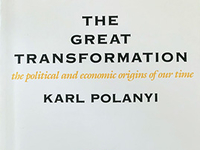
Karl Polanyi’s masterpiece published in 1944, The Great Transformation (TGT), has inspired a lot of research in social and political sciences, in sociology, anthropology, and economics. Our first symposium, organized by Global Dialogue and the president of the International Karl Polanyi Society, Andreas Novy, celebrates the 75th anniversary of his book. Authors of path-breaking books about Polanyi’s life and work, such as Fred Block, Gareth Dale, Chris Hann and Margaret R. Somers, and experts from different strands of research who are reading Polanyi’s work for our times cover a wide range of topics, from a reflection on the intellectual context which was of relevance for TGT to the analysis of economic, social, and political developments of the last decades through the lens of Polanyi’s perspectives.
Ann Barden Denis died in February 2019. She will be remembered not only for her sociological work in her fields of research, but also for her strong engagement in the ISA, as highlighted by Linda Christiansen-Ruffman, Angela Miles and Marilyn Porters in their tribute to her.
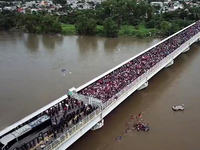
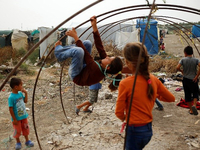
Our second symposium, organized by Karin Scherschel investigates migration, a topic with already a long tradition in sociology which has been drawing a lot of attention in the last few years. This collection of pieces from different countries combines historical perspectives with an analysis of the causes of migration, the situation of migrants and in particular refugees, the contested political regulation, and civil society’s engagement.
Fridays for Future has become a very remarkable social movement against climate change, making the growing protest of young people facing the ecological disaster which threatens the livelihood of the next generation visible. The article by Julia Kaiser and Jasper Stange maps the cross-class approach to mobilizing and coalition-building that is a new development within the environmental movement.
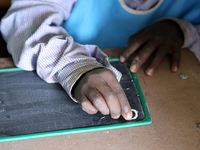
Moustapha Tamba organized a collection of articles from Senegalese sociologists. They focus on the sociology of education and give us deep insights into the organization and accessibility of education and the different types of schools and their regulation.
In our Open Section Bengi Sullu, a youth representative to the United Nations for the ISA reports on the 63rd session of the Commission on the Status of Women which she attended.
Brigitte Aulenbacher and Klaus Dörre, editors of Global Dialogue.
Global Dialogue can be found in multiple languages.
Submissions should be sent to globaldialogue@isa-sociology.org.