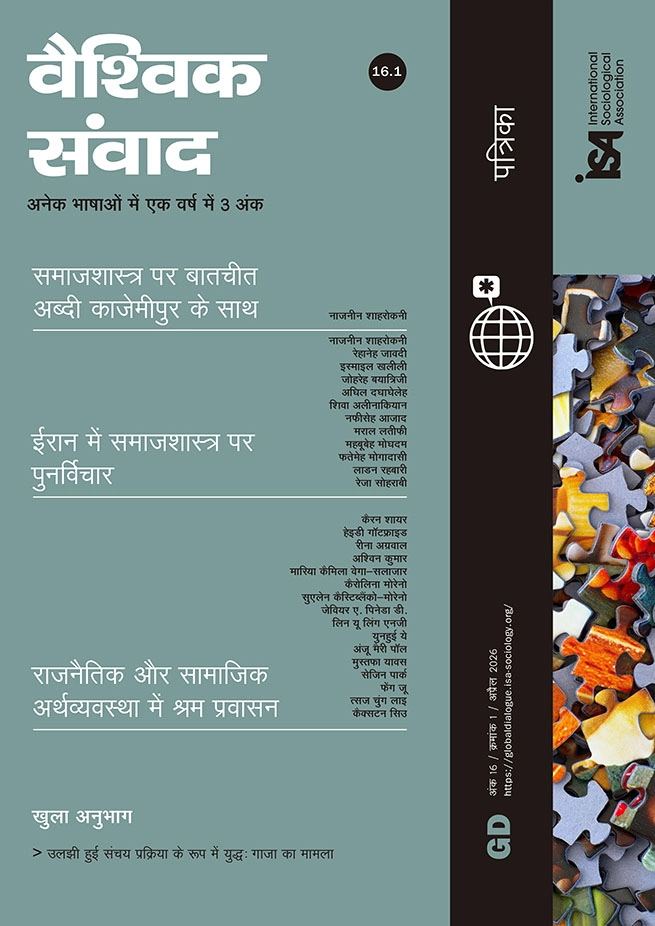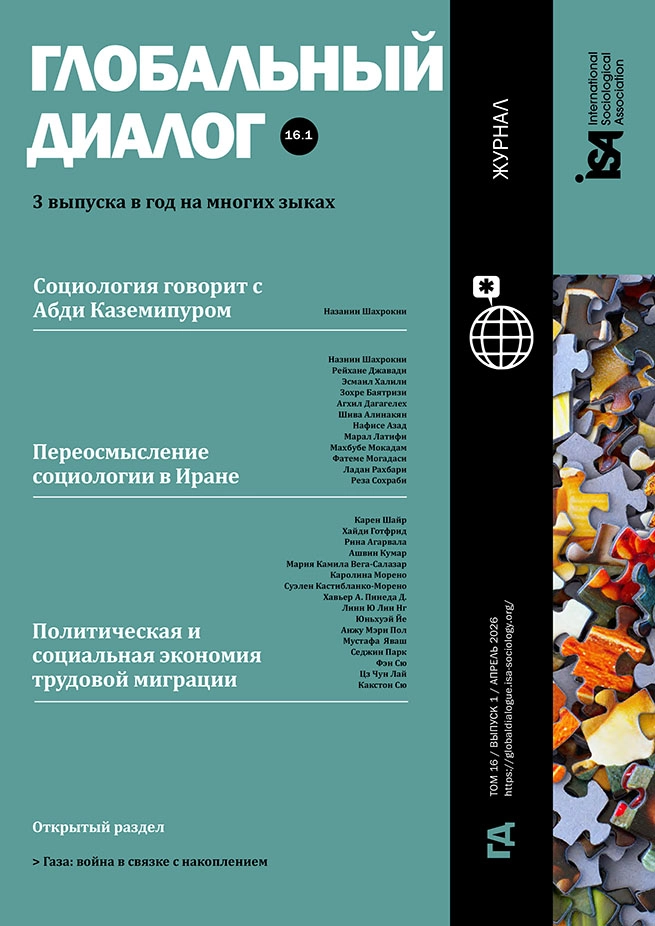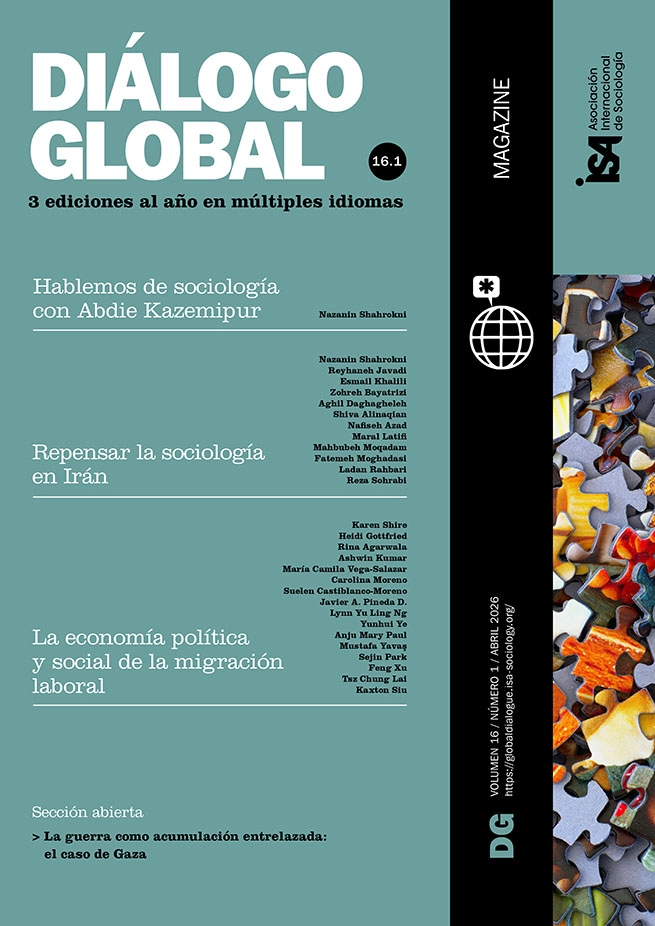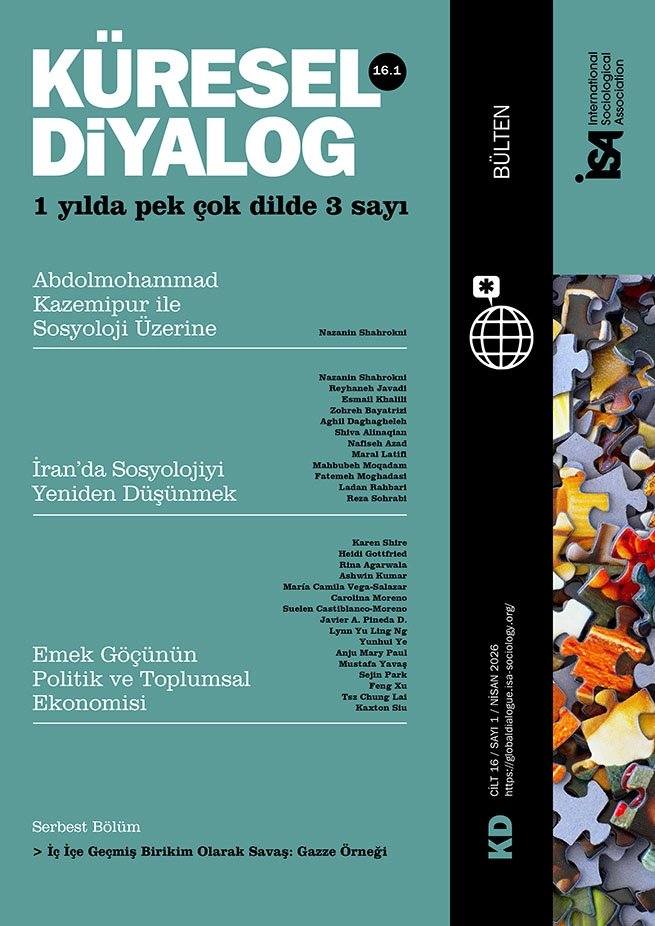
• Magazine of the International Sociological Association
  • Available in multiple languages
Portrait of T.K. Oommen

T.K. Oommen: Social Movements and Sociology beyond Westernisation

by Geoffrey Pleyers, Breno Bringel

Tharailath Koshy Oommen, who passed away on February 26th, was one of the most influential figures in Indian sociology and a pioneering voice in the effort to build a genuinely international sociology. Over more than six decades, T.K. Oommen contributed to rethinking the relationship between social movements, citizenship and plural societies, while also playing a decisive institutional role in opening up the International Sociological Association (ISA) more fully to the intellectual contributions of the Global South. A leading figure within Indian sociology over the past 60 years, Oommen...
Read more
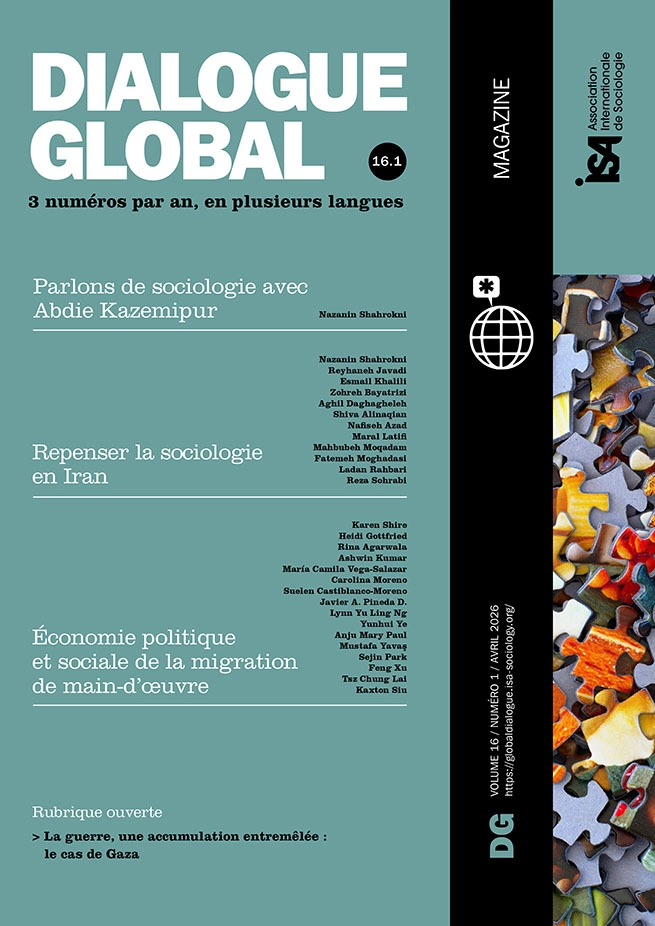
16.1
3 issues a year in multiple languages

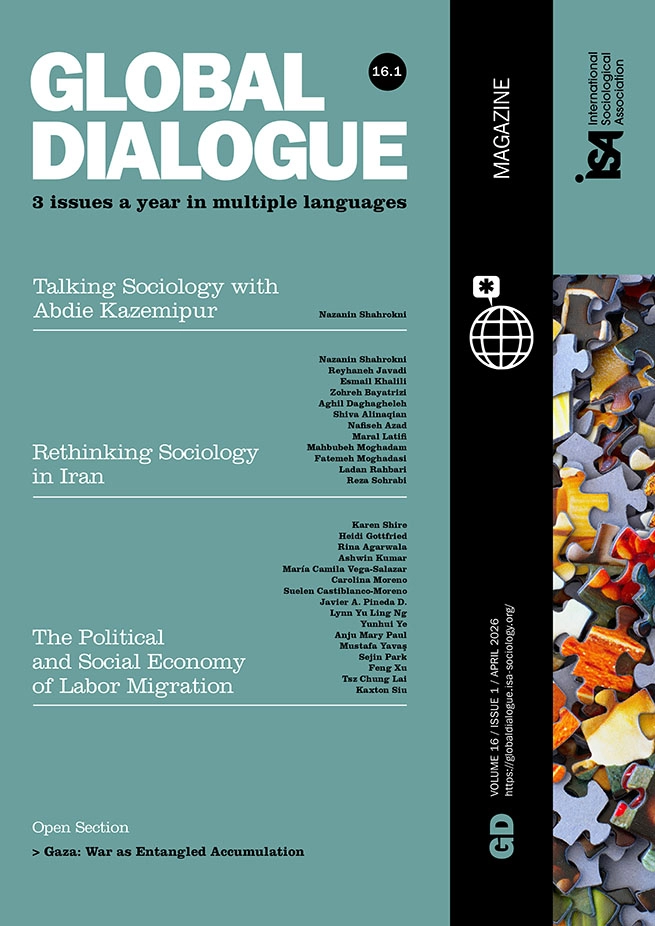
Latest Issue. GD 16.1, April 2026

Read more

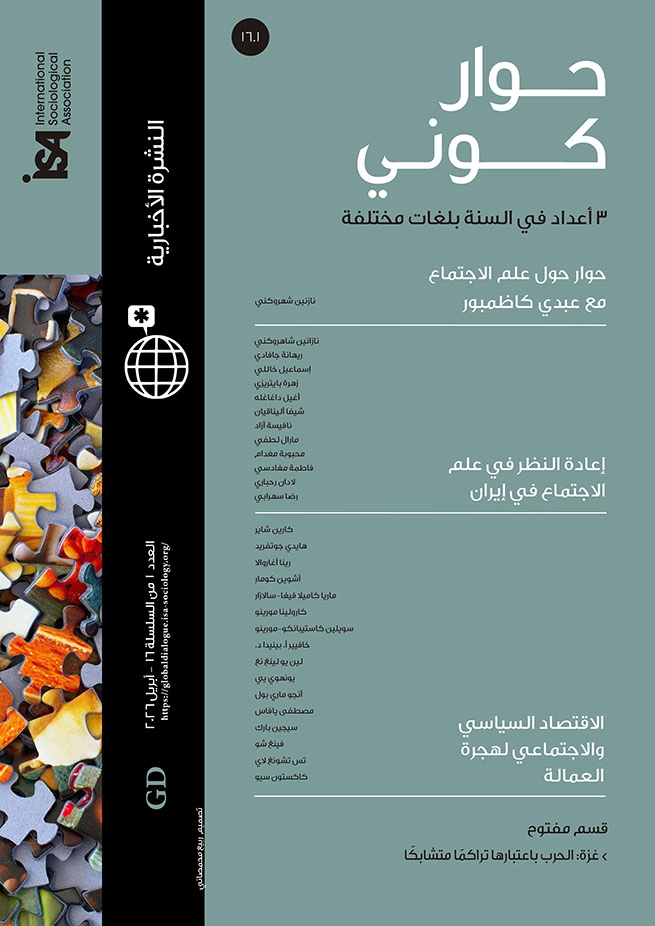
Global Dialogue is available in multiple languages! Select the language below to access the magazine:

Not available yet Request notice
Available issue Access issue
Not available yet Request notice

If you want to propose other languages, contact globaldialogue@isa-sociology.org

Read more
T.K. Oommen and Arvinder Ansari at the All India Sociological Conference in 2022

Pluralism, Reconciliation and Minorities: The Legacy of T.K. Oommen

Few sociologists in contemporary India have engaged with the complexities of plural societies as consistently and thoughtfully as Prof. Tharailath Koshy Oommen (T.K. Oommen). Over several decades of scholarship, his work explored the intricate relationship between diversity, identity, citizenship, and democratic coexistence. At a time when questions of ethnicity, minority rights and national belonging continue to shape political debates across the world, revisiting this body of work is not merely an intellectual exercise, it offers an important sociological lens through which the dilemmas of...

Read more
Book cover of T.K. Oommen’s Trials, Tribulations and Triumphs

Sociology as a Calling: T.K. Oommen and his Times

“To be authentic, sociology for one world should be utterly devoid of xenophobia and jingoism. This calls for the recognition of the assets in other cultures and civilization. The oneness of the world is to be reflected in its rich and variegated past and present, in its cultural diversity and pluralism.” (T.K. Oommen) Remembering the ancestors of our discipline is an important part of our lives as academics; and remembering is also a political...

Read more
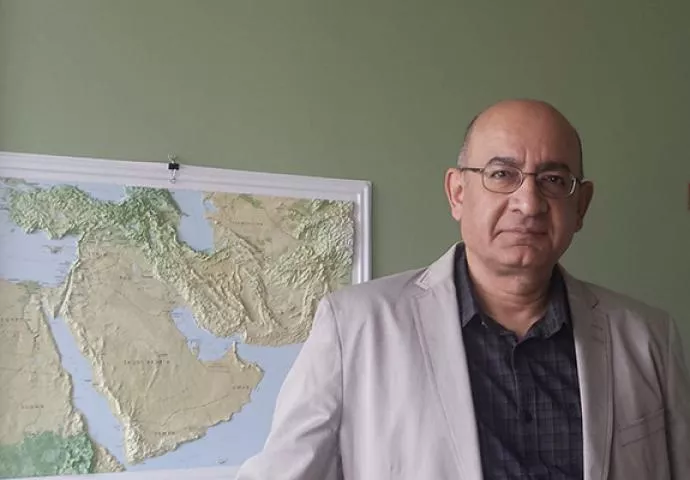
Abdie Kazemipur portrait.

The Fetish of the Particular, and the Sacred as Secular: An Interview with Abdie Kazemipur

GD 16.1

Debates over the global dynamics of sociological knowledge production have intensified in recent years, with growing interest in “national sociologies,” “Southern theory,” and “regional traditions.” Iran offers fertile ground for these discussions, as explored in an interview with Dr. Abdolmohammad (Abdie) Kazemipur, Professor of Sociology and Chair of Ethnic Studies at the University of Calgary and former president of the Canadian Sociological Association. His recent work examines how the sacred and secular intersect in modern Iran and how...

Read more
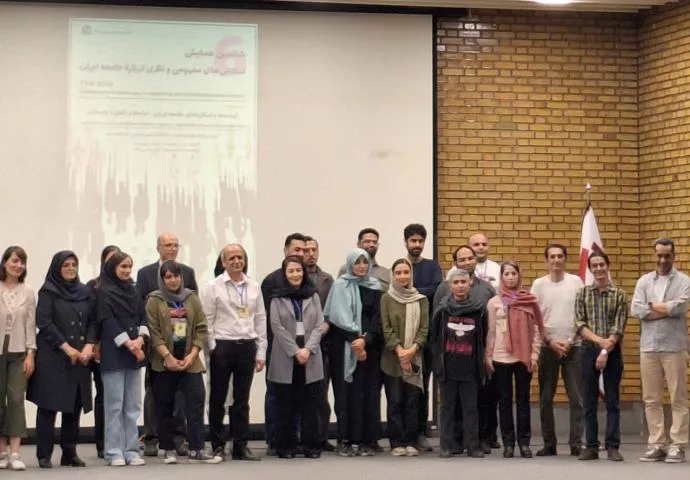
The Sixth Conference of Conceptual and Critical Reflections on Iranian Society, September 2025.

The Iranian Sociological Association and the Institutionalization of Non-Institutionalization

GD 16.1

Sociology entered Iran’s higher education landscape via the establishment of the University of Tehran in 1934, where Gholamhossein Sadighi, a Sorbonne graduate, began teaching the discipline in 1940. In its formative decades, sociology in Iran was a small and elite field, shaped by French intellectual influences and tethered to the modernist nation-building project of the Pahlavi state. It remained a discipline cultivated largely within Tehran’s academic elite, with limited institutional reach and a narrow professional community. The 1979 Revolution and the subsequent Cultural...

Read more
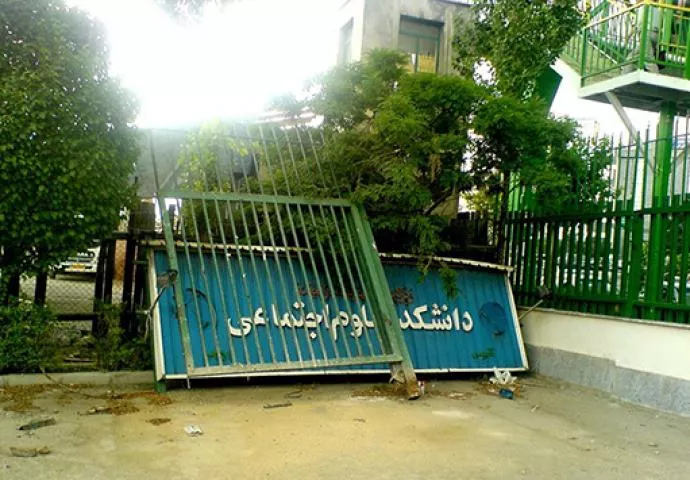
Former Faculty of Social Sciences, University of Tehran sign leaning against a damaged gate in the faculty courtyard.

Between Politics and Profits: Private Sociology Classes in Iran

External, domestic, and international political and economic forces have long shaped university teaching and research, often with both constructive and detrimental effects. In recent decades, underfunding, neoliberal funding models, and the politicization of teaching and research have forced universities in many countries to prioritize vocational training as well as research that is aligned with state or private sector priorities. On the educational front, micro-credentialism, MOOCs (massive open online courses), and certificate-based education are, at least in part, a response to these wider...

Read more
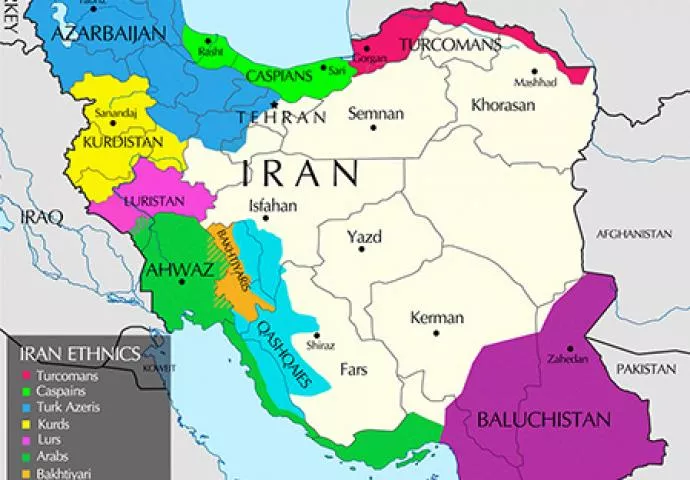
Ethnic diversity map of Iran showing major groups.

Ethnicity in Iran: The Question Iranian Sociology Avoids

GD 16.1

Ethnicity in Iran is an elephant in the room – at least when it comes to mainstream sociology. Iran is home to several ethnic groups, including Persians, Kurds, Turks, Arabs, and Baluchis. Persians constitute the majority in the central plateau, while other ethnic groups are concentrated in peripheral regions. These ethnic divisions intersect with religious differences, as Shia Islam is predominant in the center, and Sunni populations are more prevalent in peripheral regions. Even this brief description raises sociological questions, such as how such ethnic and religious differentiations...

Read more
Abstract illustration by Yonesu.

Situated Lives, Contested Knowledge: Reclaiming Gender Studies in Iran

GD 16.1

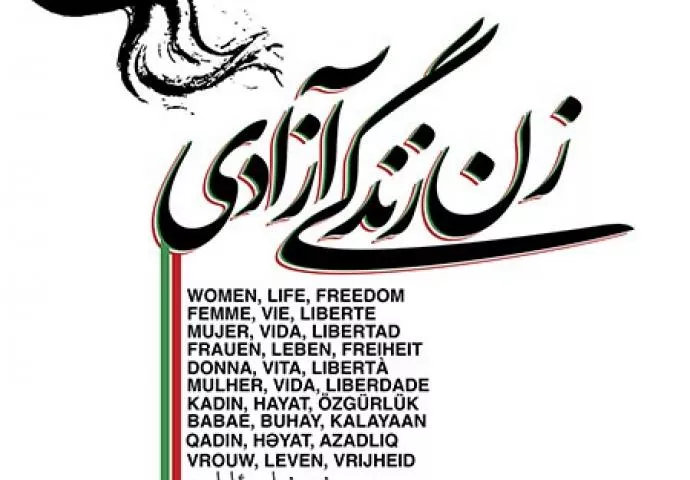
During the eight years I taught courses on gender, ethnography, and narrative in Tehran’s universities, my personal experience was continually entangled with institutional constraints and everyday politics. Being dismissed from my teaching position in 2022 – at the very moment the Woman, Life, Freedom (Jina) uprising unfolded – did not simply mark a personal rupture, it laid bare how the production of critical knowledge on gender in Iran is inseparable from power relations and forms of everyday resistance. In these conditions, even small pedagogical decisions – inviting...

Read more
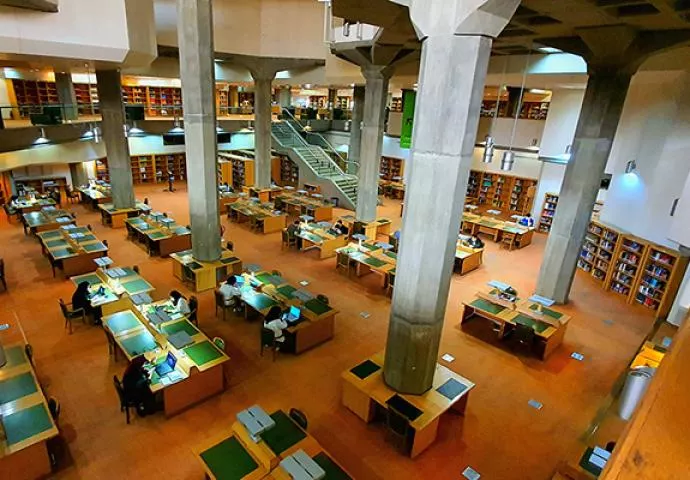
Interior of the National Library of Iran.

Under Constraint: Sociological Research on Iran. A Roundtable

GD 16.1

This roundtable brings together six sociologists working on Iran, situated within distinct academic fields and institutional contexts across varied geopolitical locations. While united by their disciplinary training in sociology, the contributors bring divergent positionalities shaped by their locations within and outside Iran, producing knowledge across national, linguistic, and institutional boundaries. The roundtable engages three key methodological questions probing the challenges, innovations, and ethical dilemmas of conducting sociological research on Iran. Though their research spans...

Read more
Stamps from an art exhibit

The Political and Social Economy of Labor Migration: An Introduction

GD 16.1

For centuries, migration has toggled between being seen as an opportunity for some and a curse for others. From the fifteenth to the nineteenth centuries, migration from Europe to South and Southeast Asia, North and South America, and Africa offered new resources, land, and opportunity to European immigrants. But these same migration flows meant conquest, land dispossession, disease, violence, and (in some cases) total cultural annihilation for native populations in the receiving countries. During the eighteenth and nineteenth centuries, forced migration from Africa and South Asia to other parts...

Read more
[[hc.publicacion.seo_titular.replace("GD ","")]]
3 issues a year in multiple languages

Coming on [[hc.publicacion.fecha]]

Global Dialogue is available in multiple languages! Select the language to download the issue.

Not available yet Request notice
Available issue Access issue
Not available yet Request notice

[[hc.publicacion.seo_titular]], [[hc.publicacion.month_pub]] [[ hc.publicacion.fecha| date:'yyyy' ]]

In this issue

View all articles

This issue is not available yet in this language.
Request to be notified when the issue is available in your language.

Invalid or Required Email.
Not saved
We have received your notice request, you will receive an email when this issue is available in your language.

If you prefer, you can access previous issues available in your language: